Welcome to Martha Washington Wednesdays. This post will cover How To Make 18th Century Accessories such as bergère’s, mantles, mitts, and market bonnets, as well as a fun cake hat!
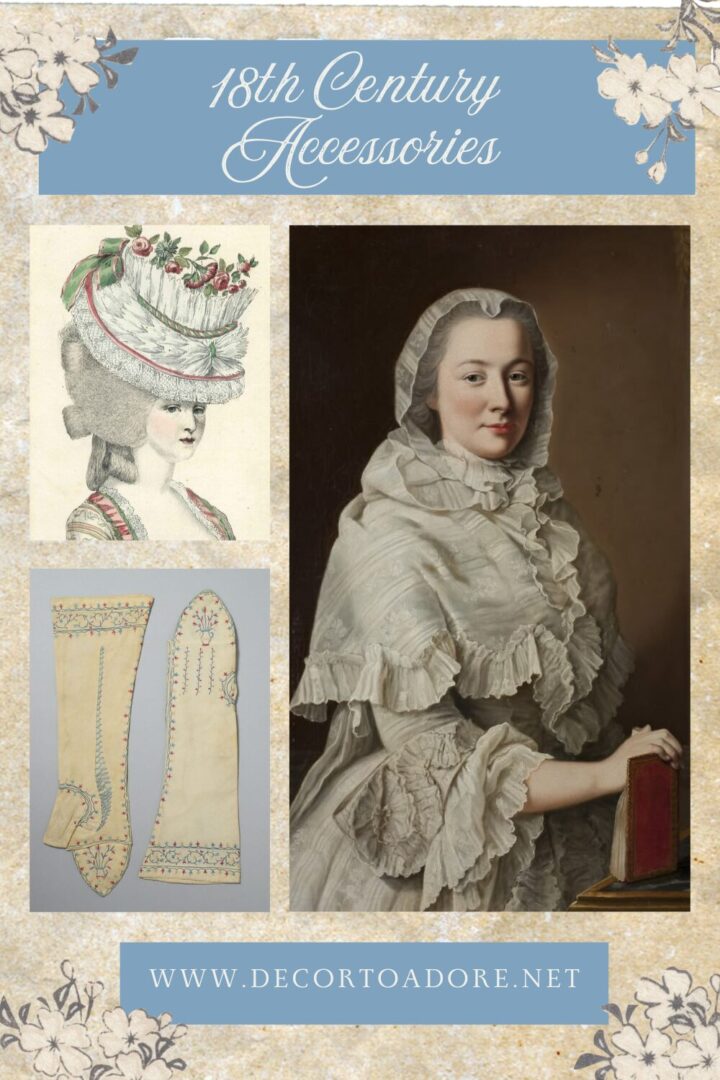
How To Make 18th Century Accessories
One great beginner project for 18th century costuming is a bergère hat.
Bergère hats were in style for many years in the 18th century. They were worn by people of all classes.
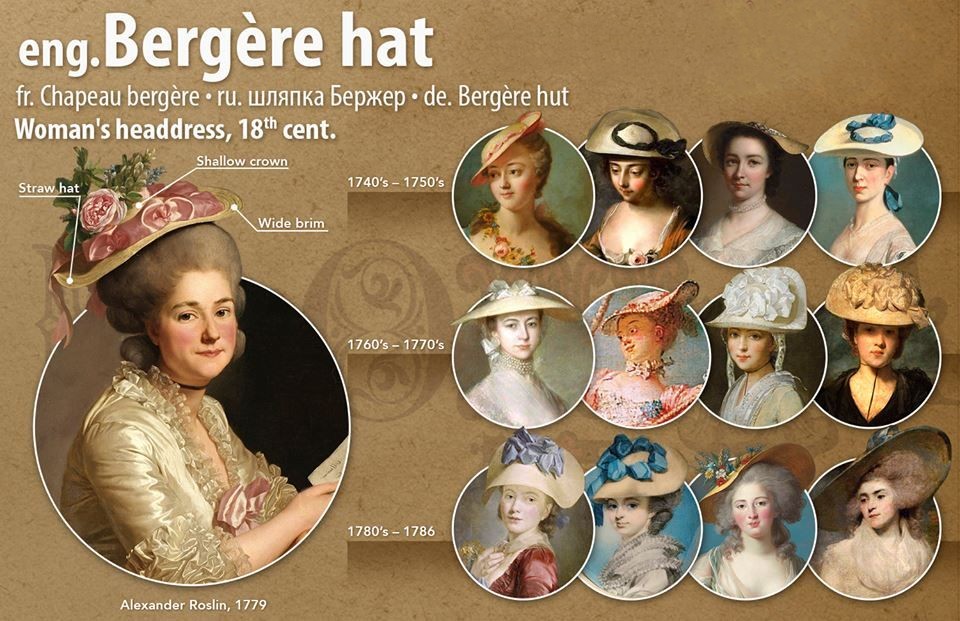
Bergère hats were made of straw and could be embellished in numerous ways. You can find ready made straw bergère hats online.
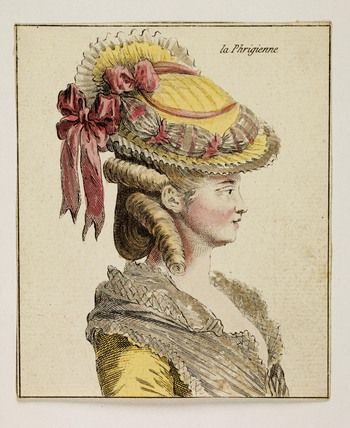
Bergère hats were often covered in silk in a wide variety of colors.
Harriet Churchill, Lady Fawkene, c. 1754, by Jean-Étienne Liotard

I shared how I decorated one of my bergère hats in this post.
The Market Bonnet
The market bonnet was also fashionable for many years and worn by people of all classes.
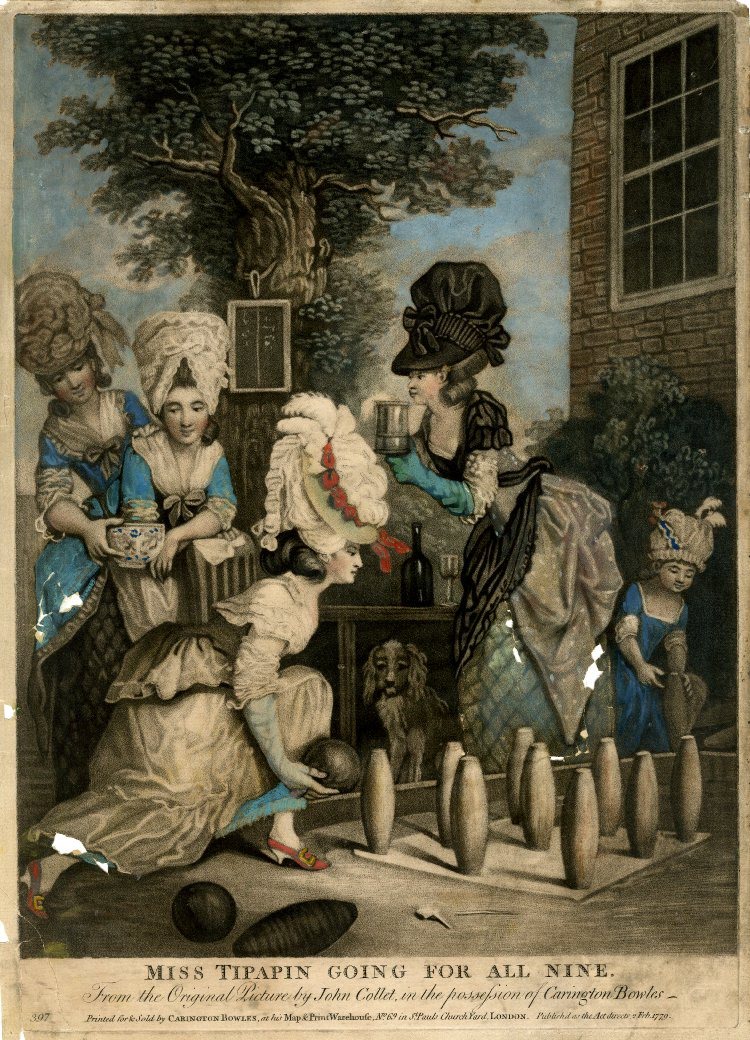
The Cake Hat
The Cake Hat was most popular in the late 1770s through the 1780s.
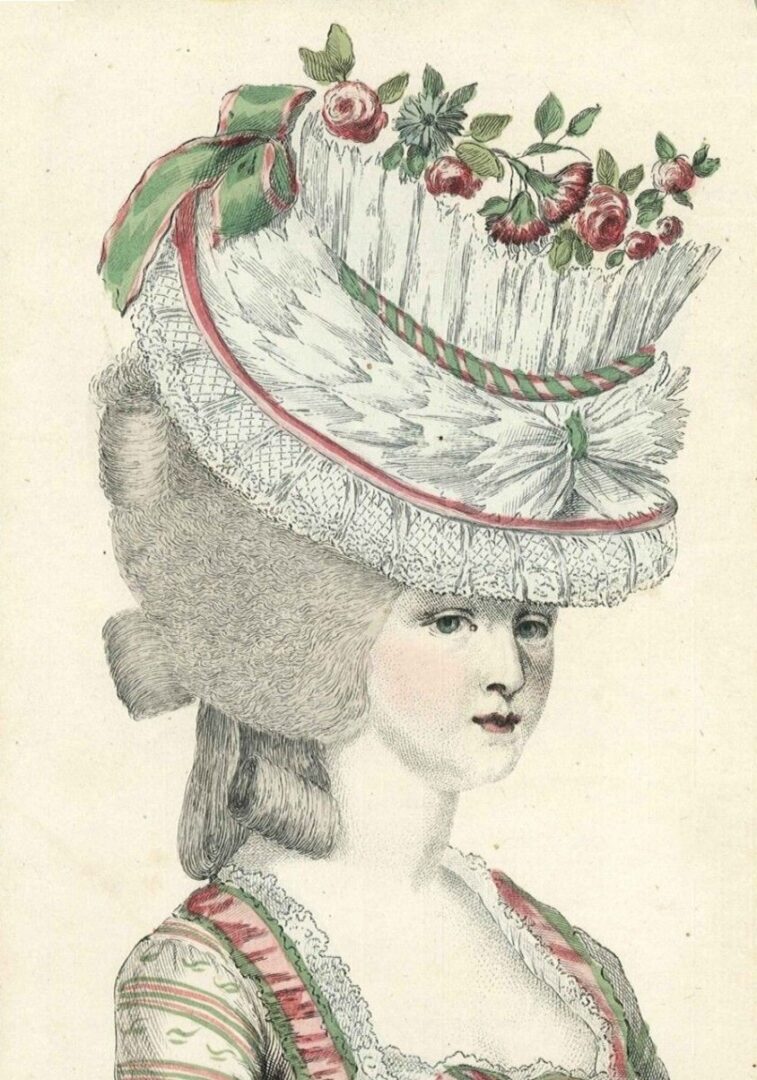
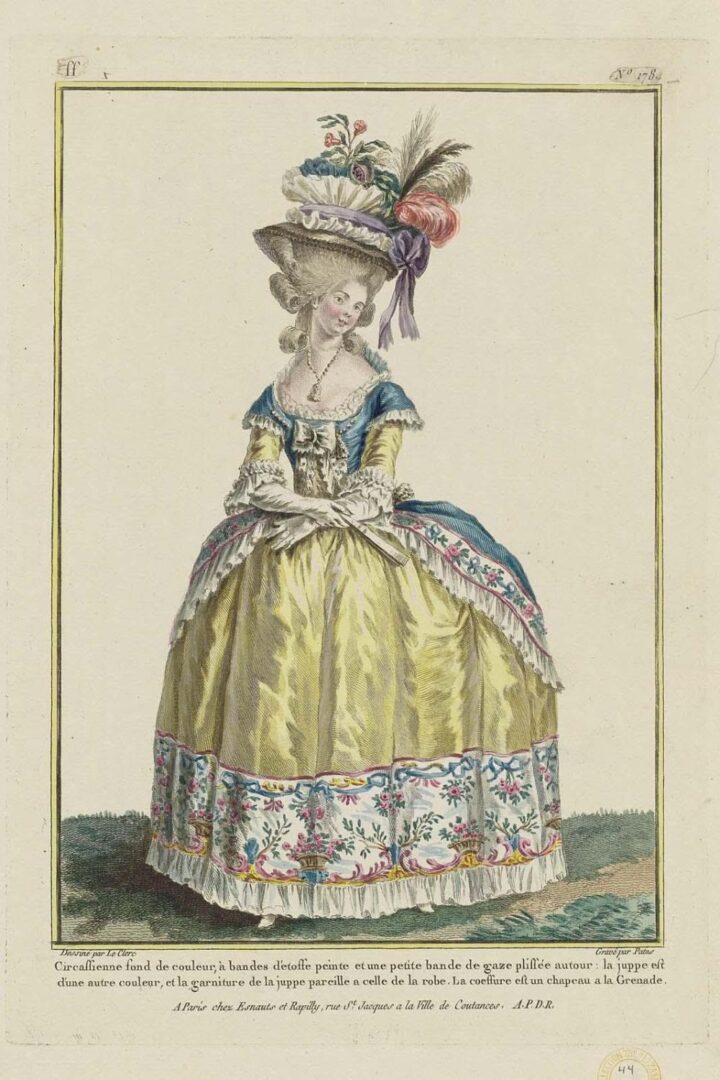
When looking at fashion plates of the time these frothy confections were most often just referred to as a chapeau, the French word for hat.
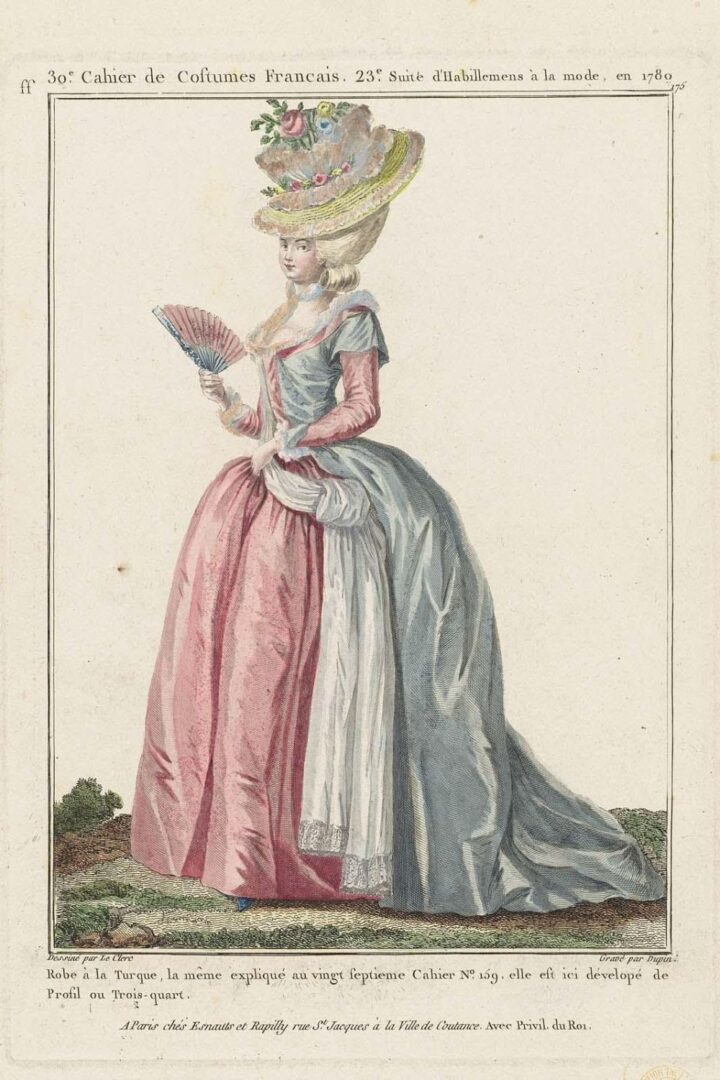
Although this fashion plate describes this cake hat as a chapeau Anglais (English hat) and/or chapeau à la Turque (Turkish hat).
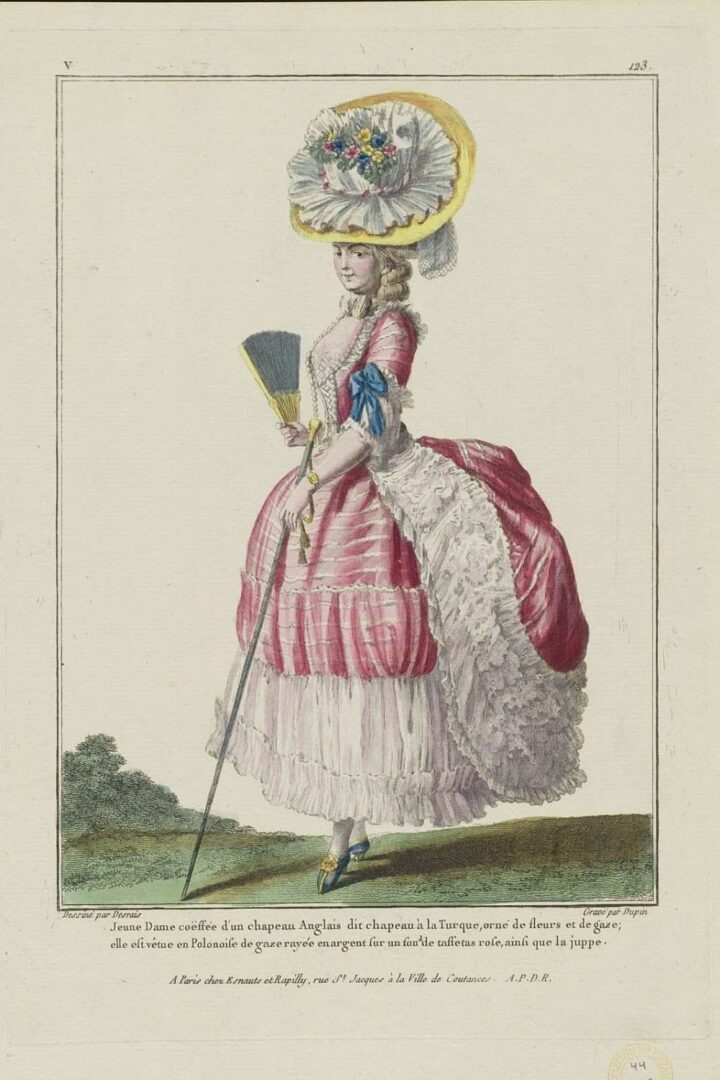
This is a chapeau Grenade (hat from Grenada).
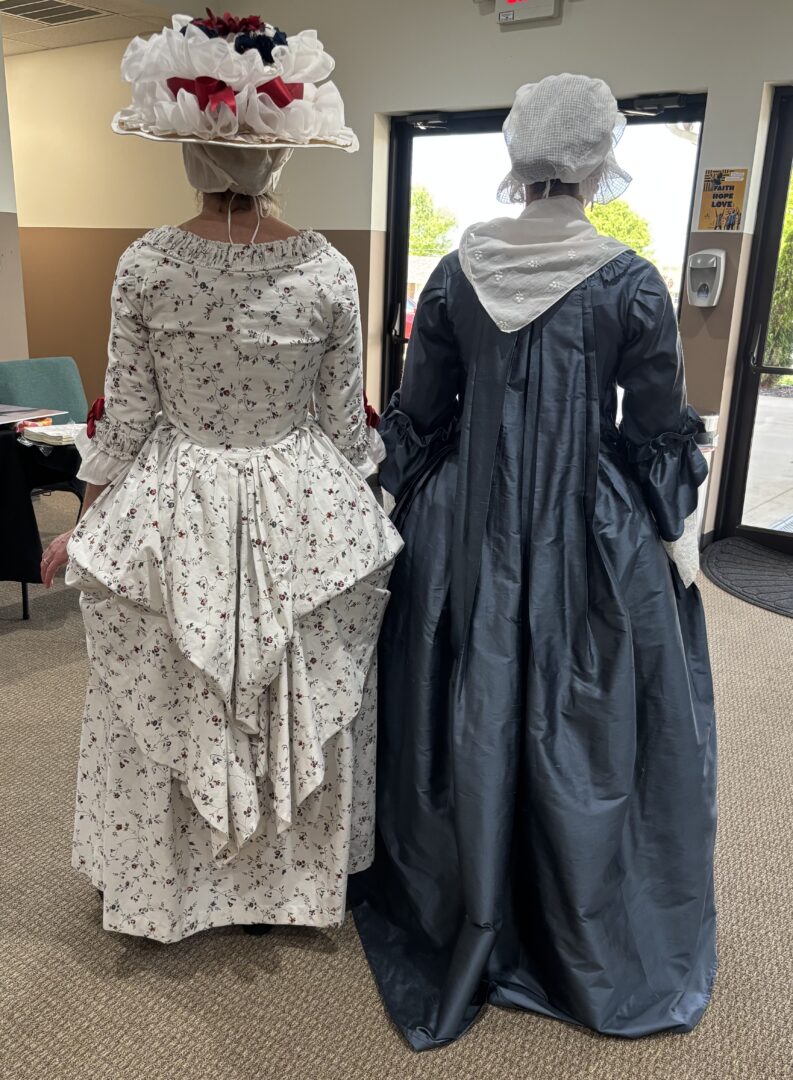
How I Created My Cake Hat
I began with a simple rounded straw hat found at the thrift store. The crown was covered with a large circle of white silk.
I then sewed on a thin millinery wire around the edge of the brim and then covered it with a bias strip of silk binding.
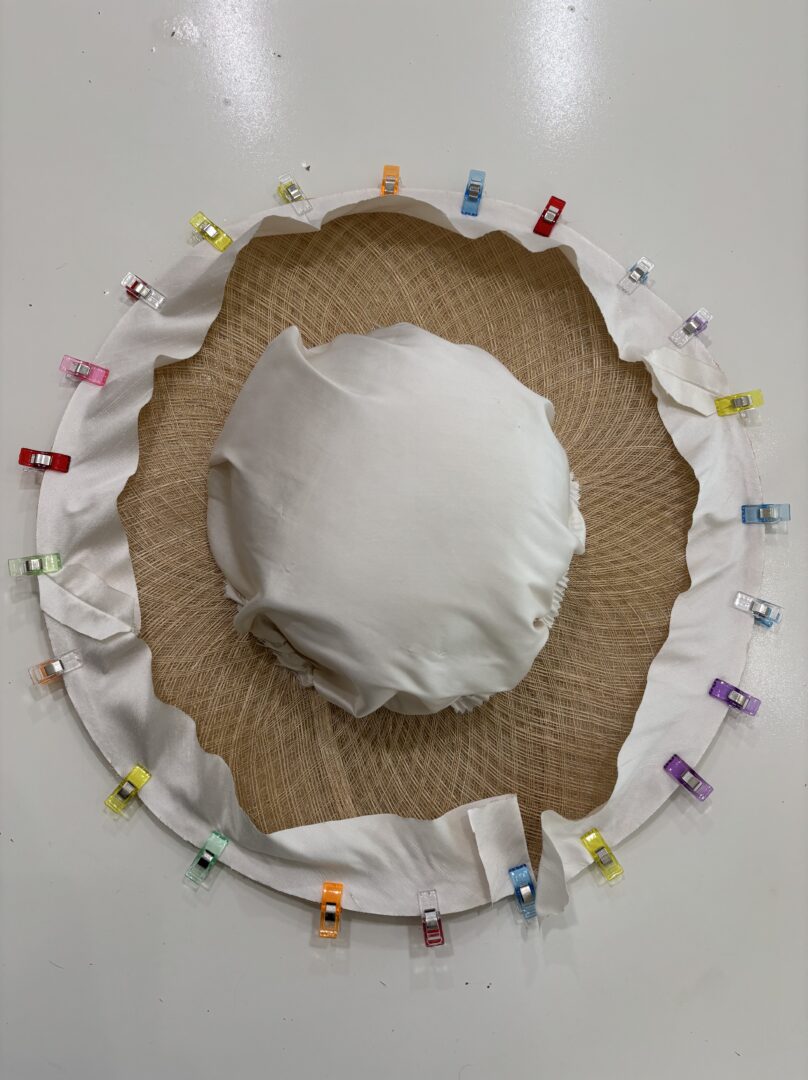
Then strips of silk, that were pinked on the edge, were ruffled and sewn on to the brim.
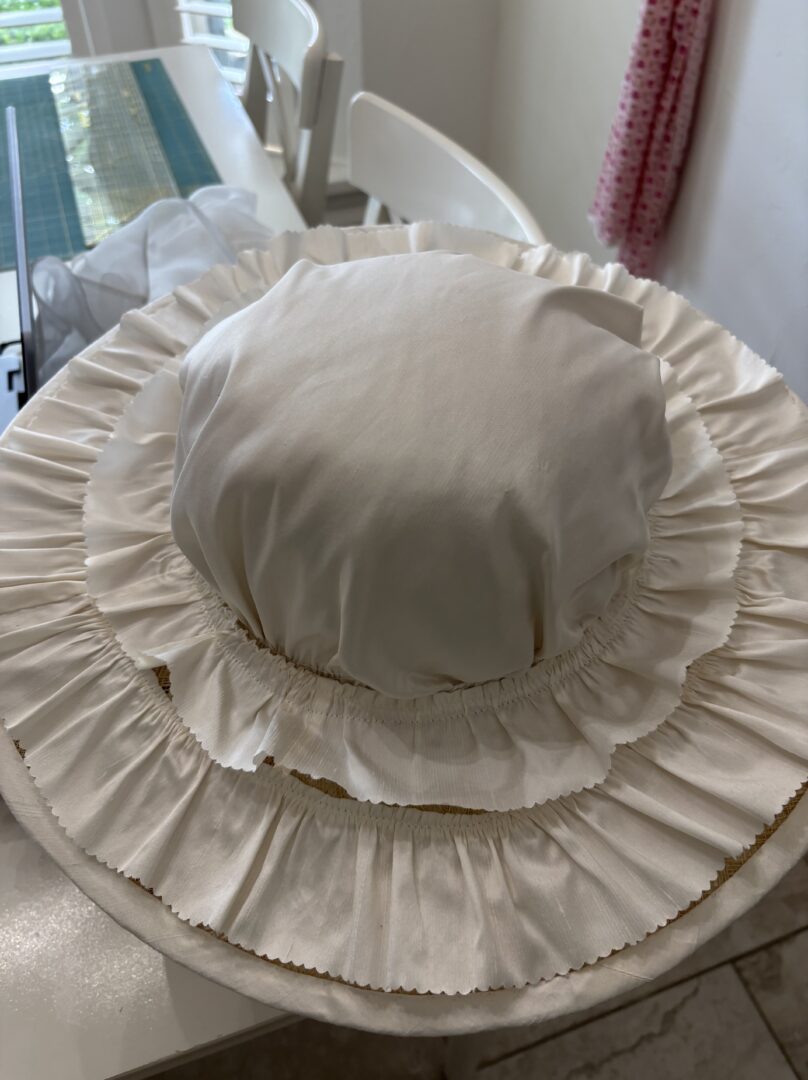
A silk organza strip three times longer than the circumference of the hat was then hemmed on each side and the ends were sewn together to form a big circle. The center of the strip was then gathered and the threads pulled until it fit the crown of the hat. It was secured in place with a wide silk ribbon.
The top embellishment was created on a circular piece of wool felt. All of the flowers were tacked on to the wool circle.
You can see me making the flowers in this Instagram reel.
The circle is then held in place, on the crown of the hat, using hat pins. You can see this demonstrated in this week’s video.
The beauty of the floral embellishments being removable is that I can make numerous color combinations to match any gown.
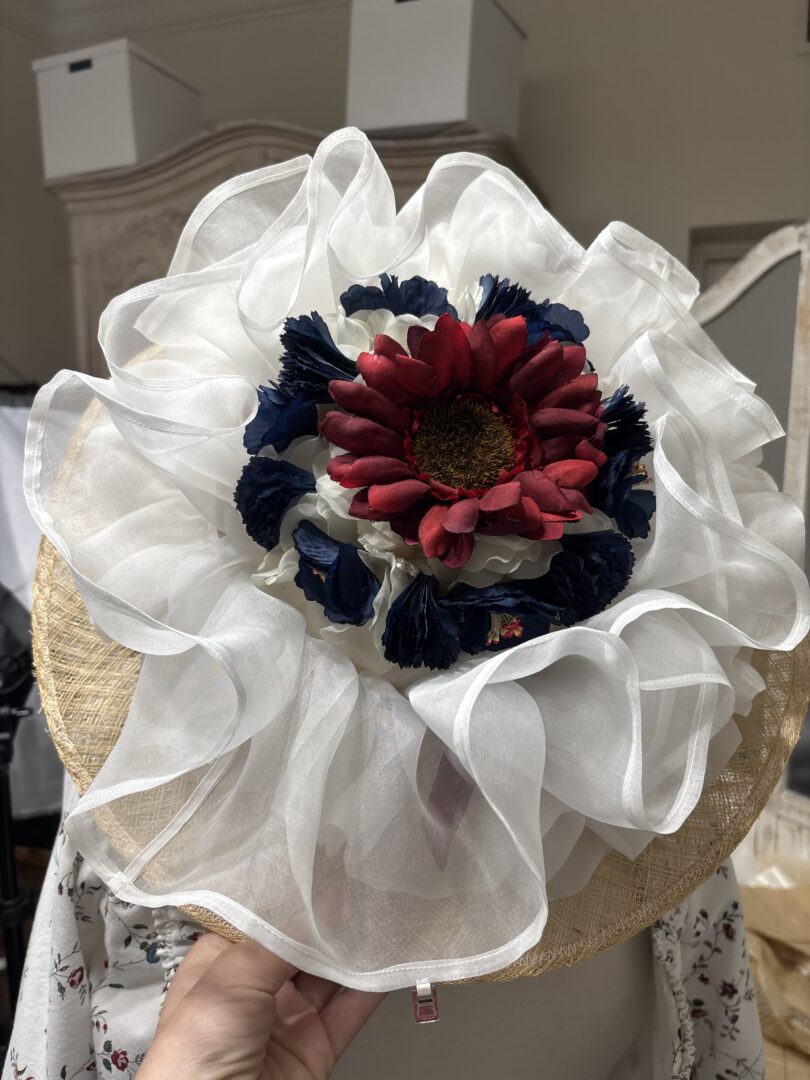
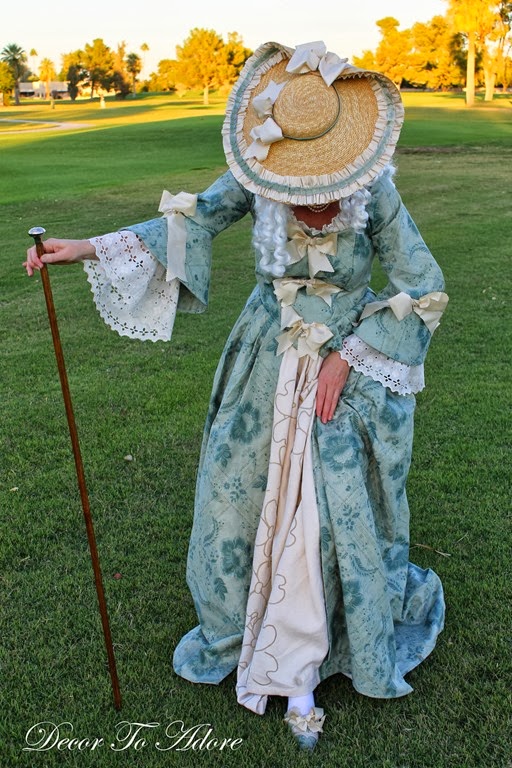
Here is the hat in all it’s glory.
The Market Bonnet
The market bonnet was also fashionable for many years and worn by people of all classes. There are various patterns and kits, as well as ready made bonnets, available online.
You can find numerous portraits and artwork featuring such bonnets HERE.
The Watercress Girl , c. 1785, by Johan Joseph Zoffany
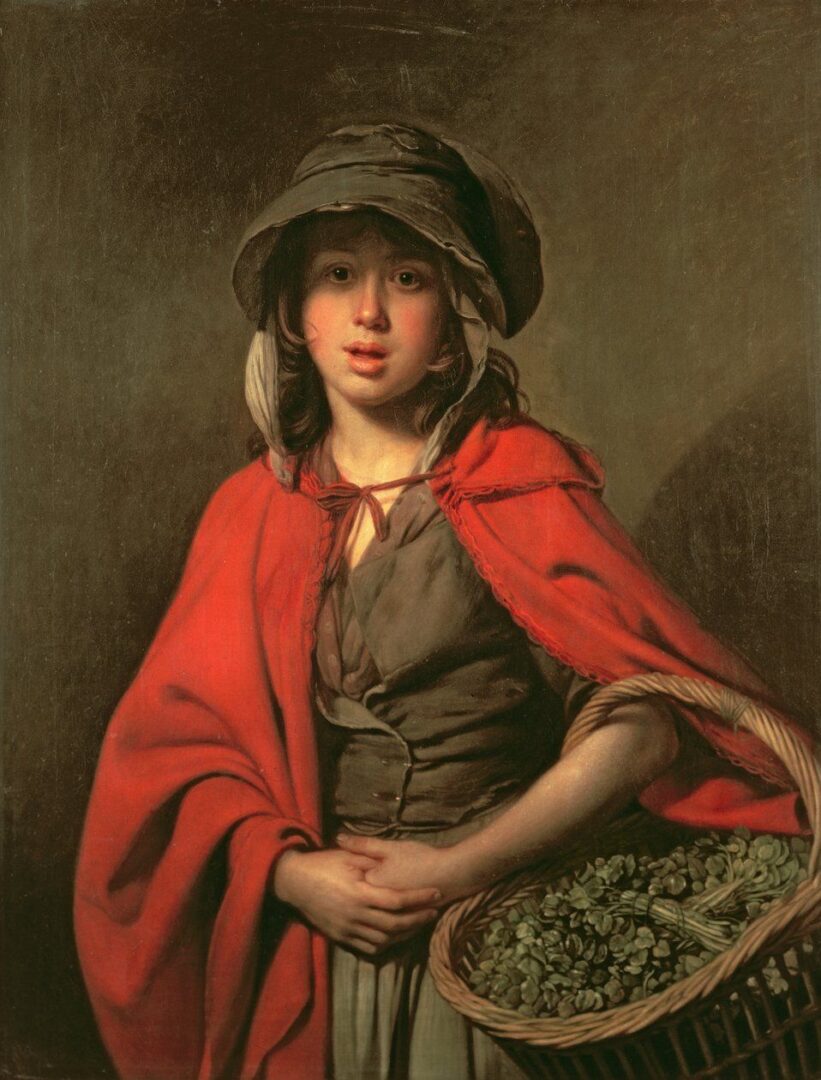
The crown of the bonnet in the latter part of the 18th century grew quite big to accommodate the increasing height of the hairstyles.
While the bonnets are most often seen in artwork as made from black silk they were made in a variety of colors as well as in linen and wool.

Mitts
Throughout most of the 18th century the sleeves on gowns and ladies jackets ended around the elbow. To protect the skin from the sun, as well as to keep warm in the winter, mitts were often worn.
You can find various patterns, as well as ready to wear mitts, on several online sources.
Mrs. James Russell (Katherine Graves), c.1770, by John Singleton Copley
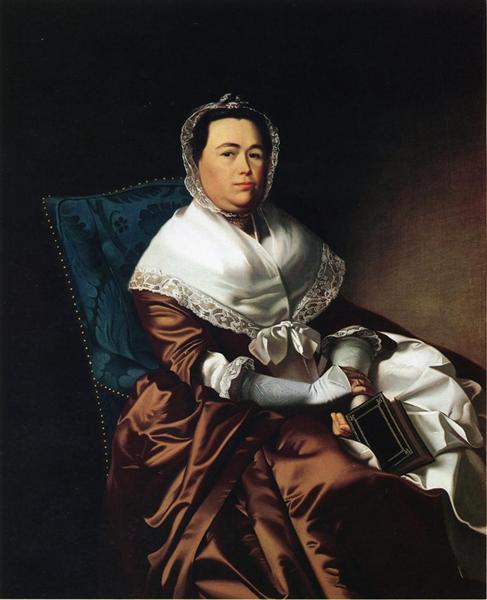
Silk and wool mitts were often worn in the winter, while linen, like those shown below, were preferred in the summer.
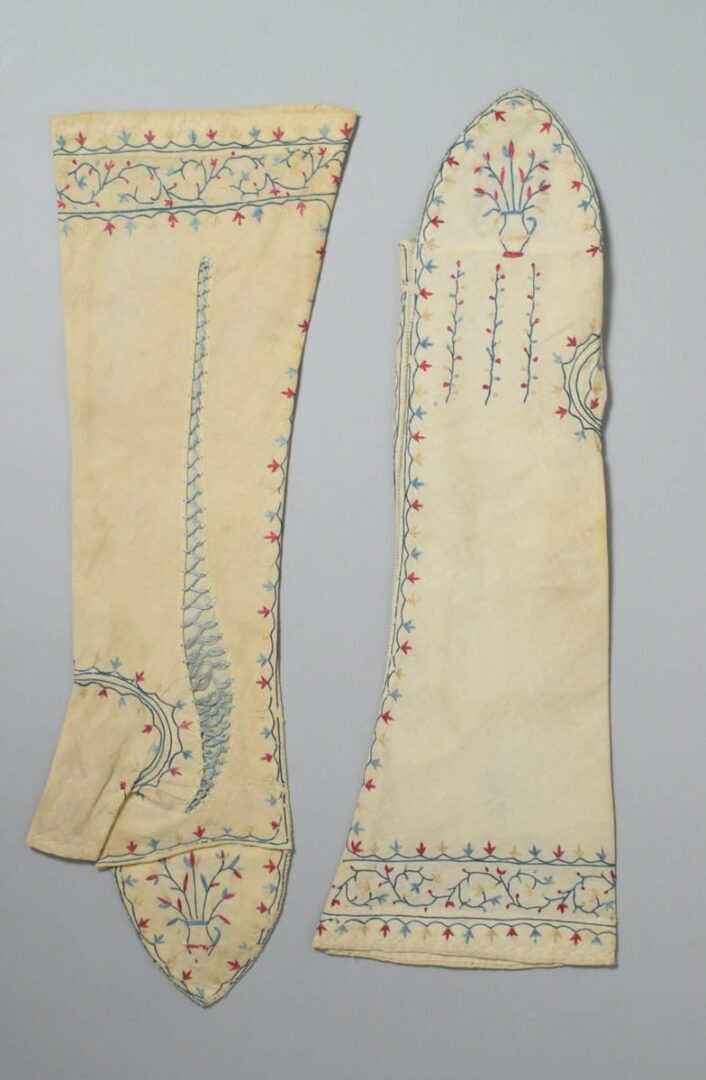
Mitts could even be knitted. These are from the Colonial Williamsburg Foundation and date between 1780-1810. They are hand-knit, seamlessly, with very fine linen yarn/thread on very small needles. Truly fine needlework at a gauge of about 22 stitches per inch.

Capes, Cloaks and Mantels
Capes, cloaks and mantels were also worn throughout the century in a wide variety of styles, fabrics, and colors.
November of The Twelve Months, 1781

Again, this was a garment worn by all classes.
The Female Orators, by Rennoldson a printmaker, based on artwork by John Collet, John, c. 1768

I love the delicate cupcake mantles made from silk.
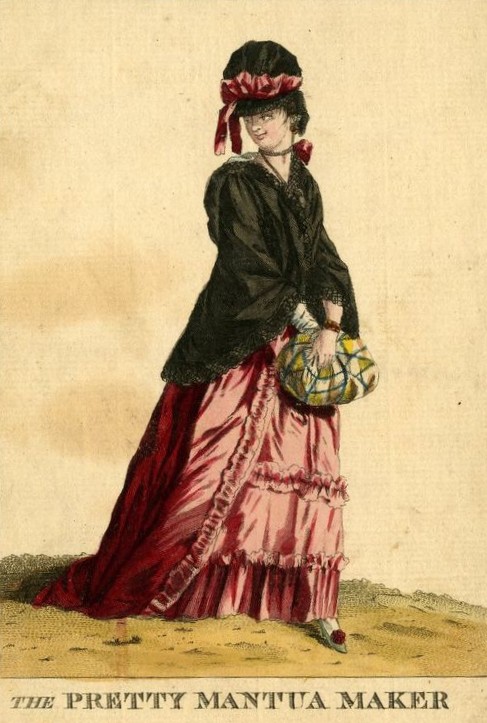
Lace was beautiful as well.
Margaret Lindsay c. 1758 by Allan Ramsay

Portrait of Countess Palatine Christiane Henriette of Zweibrücken, c.1748 by Johann Georg Ziesenis
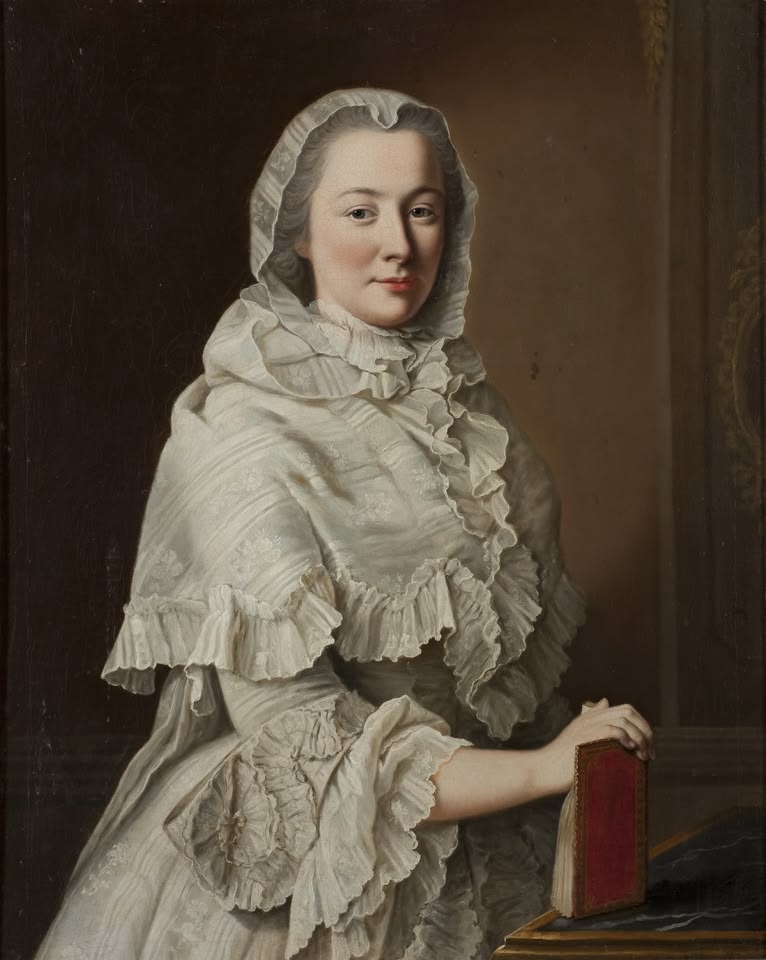
This charming mantle is in the archives of the V & A.
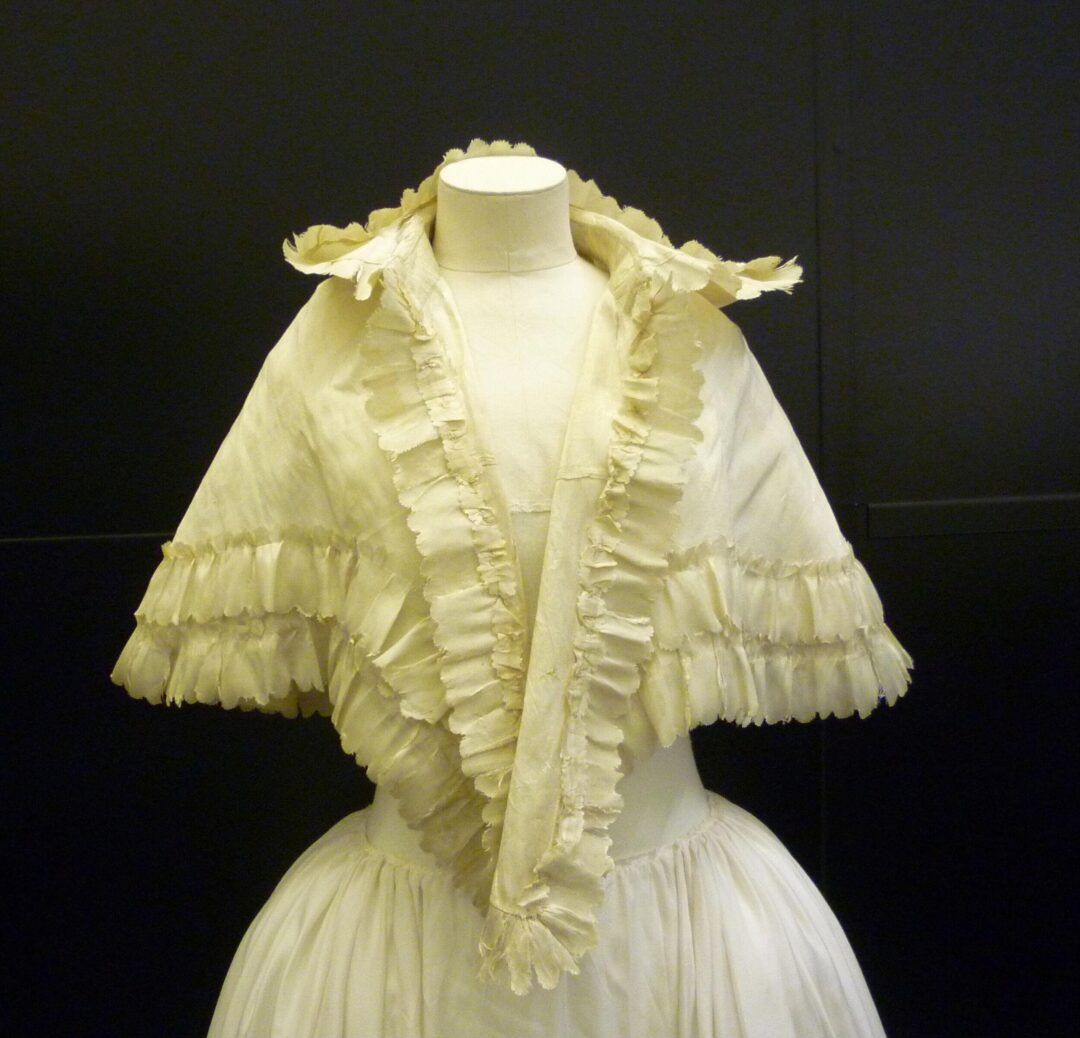
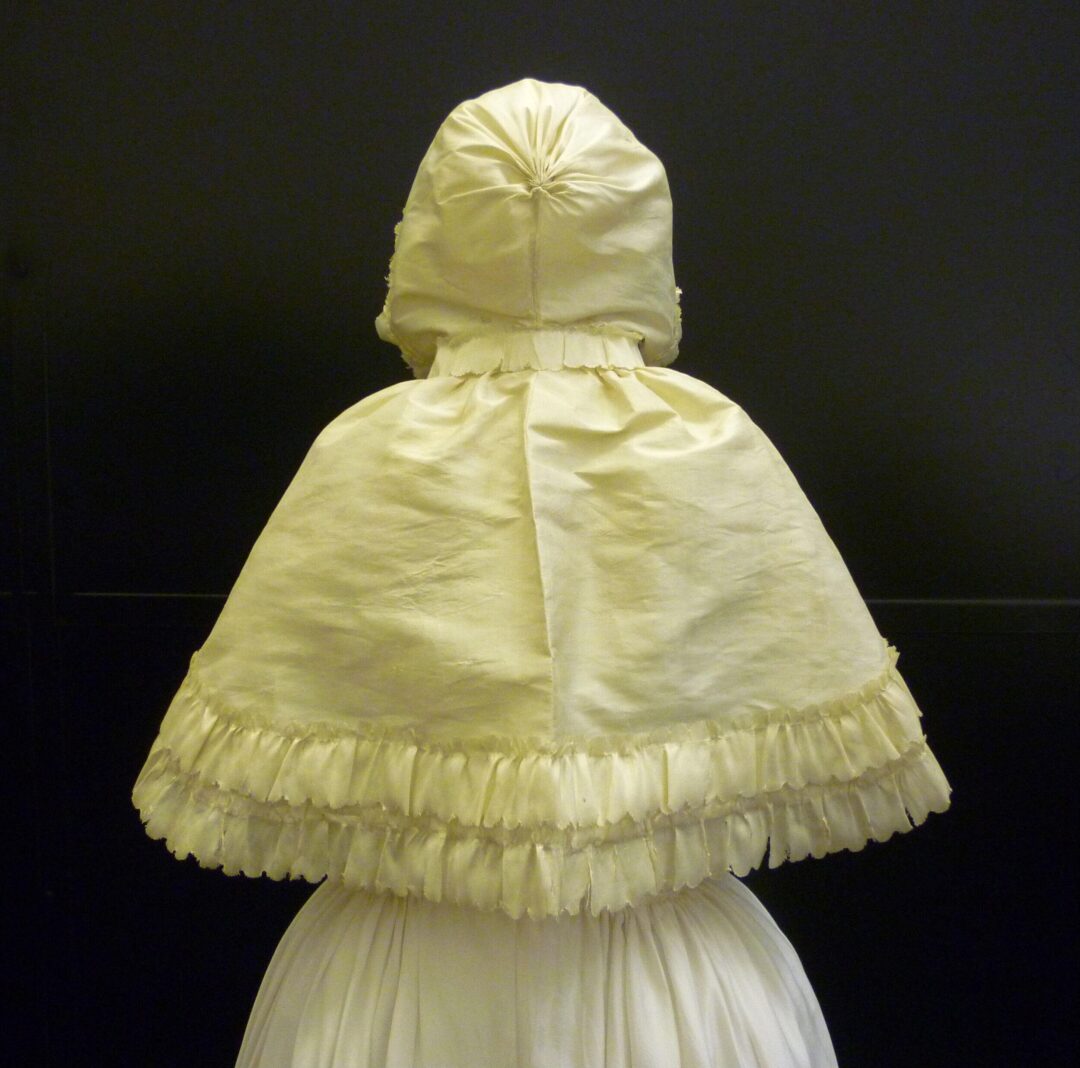
Marie Mantle By Scroop
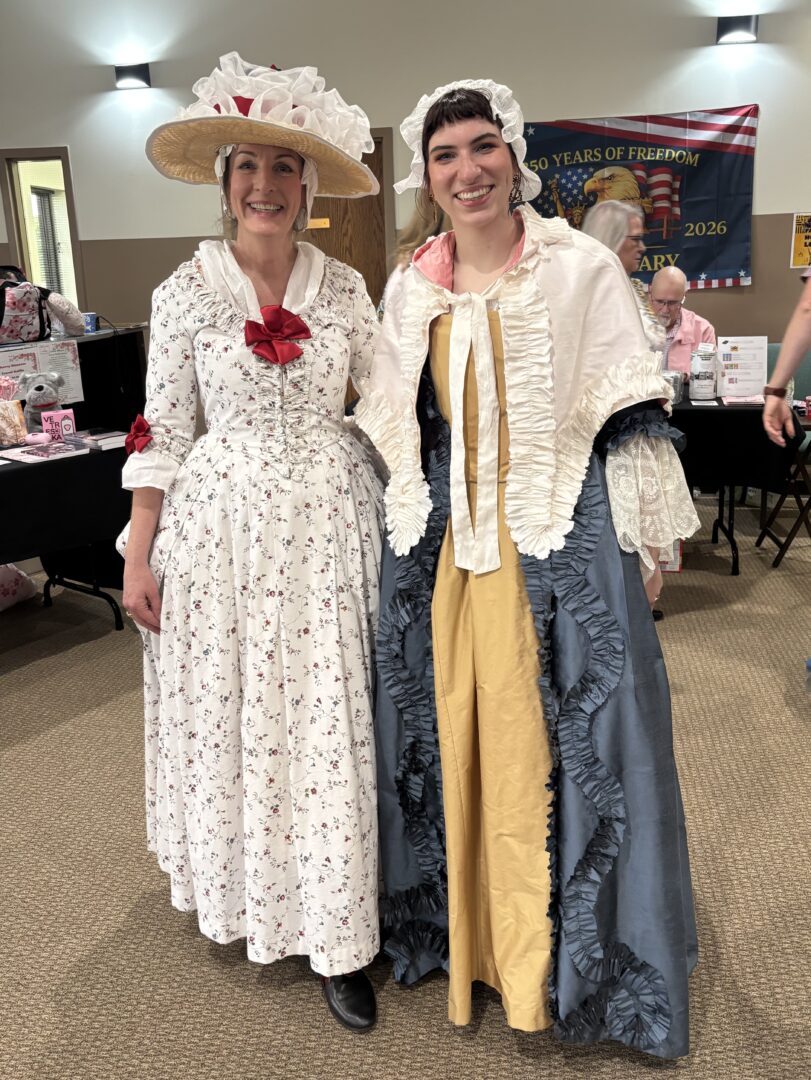
To create a mantle for my What Martha Washington Might Have Worn presentation I used the Marie pattern by Scroop.
The cape portion could be sewn by a beginner. Particularly if it is out of wool.
The pleated hood is a bit fiddly and tricky. I required the assistance of my dear friend Dartanyan, who is much more well versed in 18th century sewing than I am.

I made the mantle from ivory silk and lined it with a salmon pink silk. This was a popular lining color. It is such fun to wear!
This Week’s Video
If you wish to view this week’s video in a larger format just click on the black box in the lower left hand corner that says Watch on YouTube.
Have a beautiful day!
Laura
You May Also Enjoy These Posts
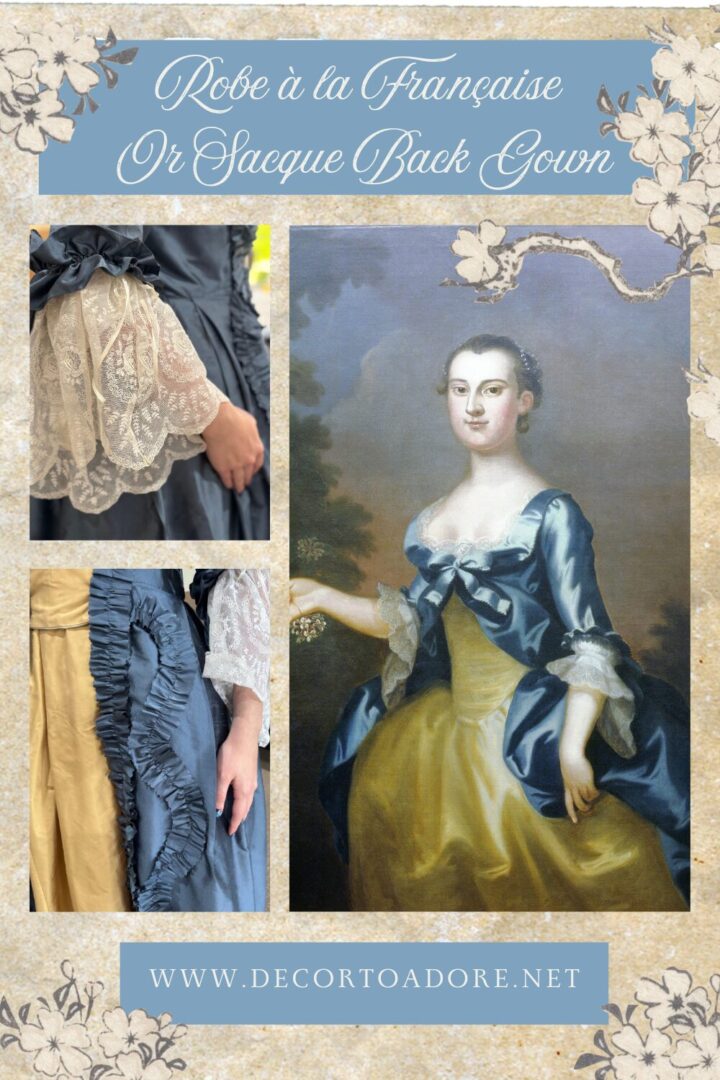
Robe à la Française Or Sacque Back Gown