Hello sweet friends! This post will be part of an ongoing historical fashion project in celebration of the 250th anniversary (Semiquincentennial) of the Declaration of Independence (July 4, 2026). Today I will be sharing a newly sewn 1750s Casaquin Jacket as well as 18th century undergarments.
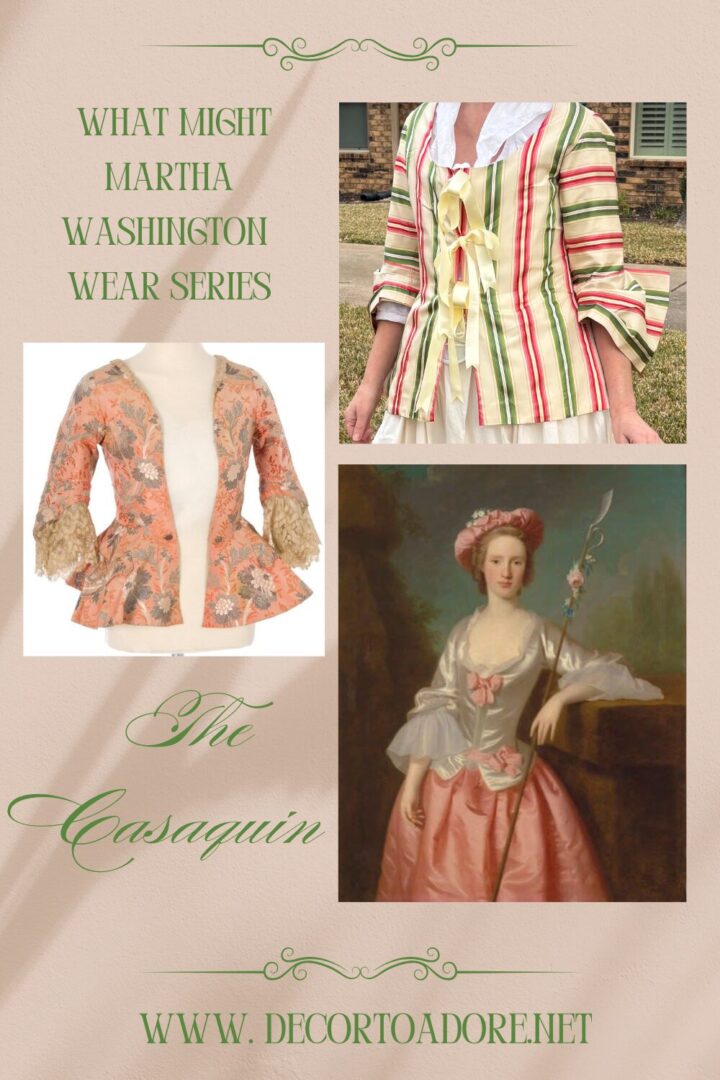
What Might Martha Washington Wear
All over the United States there will be many events to celebrate the Semiquincentennial branded as America250. I will be giving a presentation featuring garments inspired by What Martha Washington Might Wear at the National First Ladies Day celebration on April 25, 2026.
Mrs. Washington was of course our very first First Lady.
The first known image of Martha Dandridge Custis was painted by John Wollaston in 1757. At the time she was married to her first husband, Daniel Parke Custis, one of the wealthiest men in Virginia. Sadly, tragedy would strike and Martha was left widowed, with young children, at the young age of 26.

18th Century Undergarments
In 18th century fashion you must begin with the undergarments. These items provide the foundation for a correct silhouette.
A lady, no matter her status, would begin with a shift (chemise). This would be followed by stockings, garters and shoes. Next, an under petticoat would be put on. Then a set of stays to support the bust and weight of the exterior skirt.

From there a lady might add another foundation garment such as a bum roll, split rump or panniers to provide even more shaping.

1776 Create Along
I have slowly been creating some 18th century undergarments and sharing them on Instagram and Facebook as part of my 1776 Create Along. (Feel free to join in the fun.)
The Pièce de résistance of my project will be to create a dress similar to Martha Washington’s pink inaugural dress. It dates to the 1780s.
UPDATE: Based on amazing historical research by Mount Vernon this dress will not be part of the collection I am creating. Future posts will reveal all the garments being made and it will be a truly stunning collection!

I began by sewing a linen chemise. Second was a mock up petticoat made from cotton muslin. (I plan to make the final under petticoat from linen.) Then came the 1780s stays.
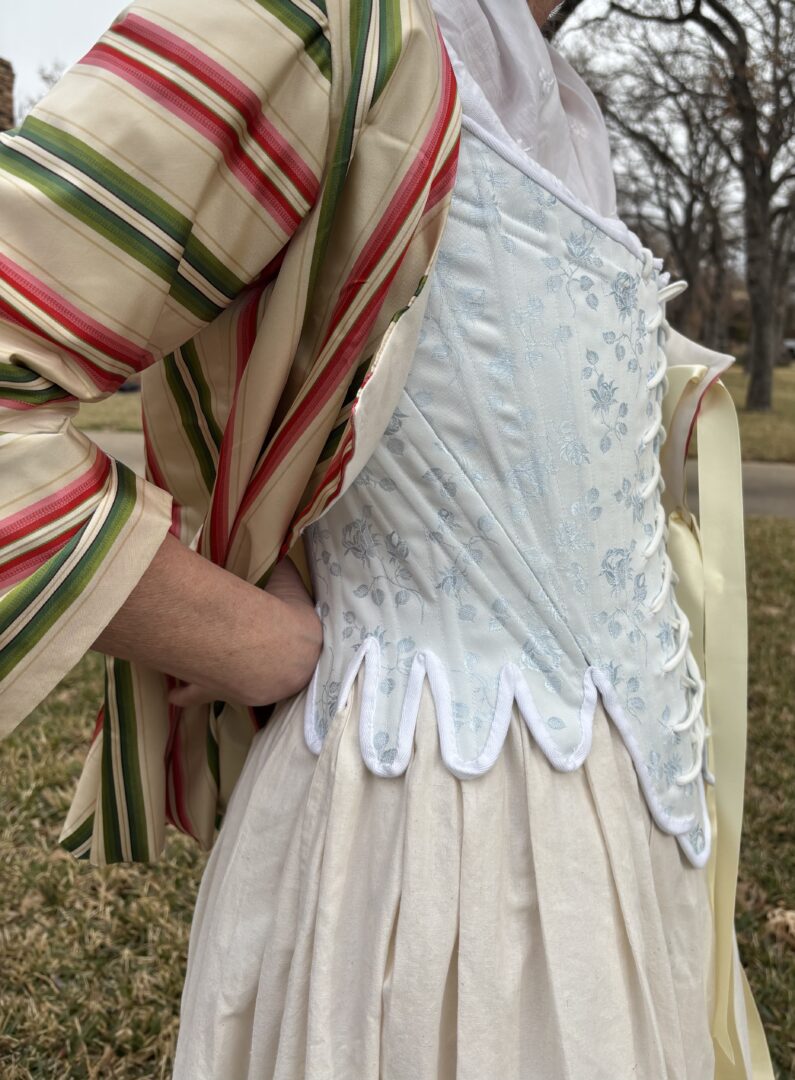
Note: the stomacher had accidently slid down. It should be even with the top of the stays.
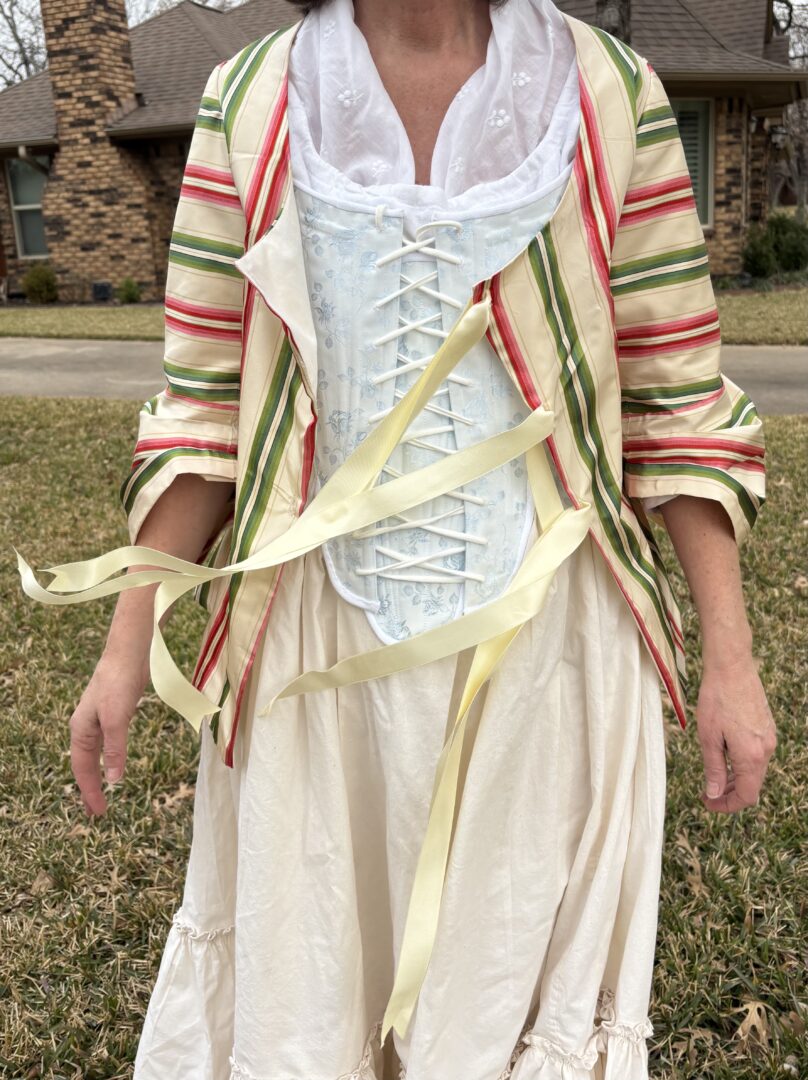
The stays were made with the RedThreaded pattern, and a beautiful blue cotton brocade coutil from Richard the Thread. The stays also feature an interior made from plain white coutil, synthetic whalebone boning and white lacing from the same source.

Reality check ~ the tabs were bound by hand and the lacing eyelets were hand sewn. This project took well over 30+ hours to complete and just the supplies alone were over $120+.
In my opinion, any custom corset maker that charges less than $400 is not charging enough.
A Wonderful Workshop
Next week I will be traveling to Virginia to attend Burnley and Trowbridge’s robe à l’anglaise workshop taught by the preeminent historical seamstress Brooke Welborn. (Ms. Welborn recreated Mrs. Washington’s wedding dress last year for Mount Vernon.

Such dresses begin with the model wearing a fitted bodice lining and then fabric is draped, fitted and cut out on the body.
All period appropriate undergarments are worn.
Given that it is winter time and I am a lady of a certain age I wanted a little jacket that I could pop on between fittings.
Enter the Casaquin.
What Is A Casaquin?
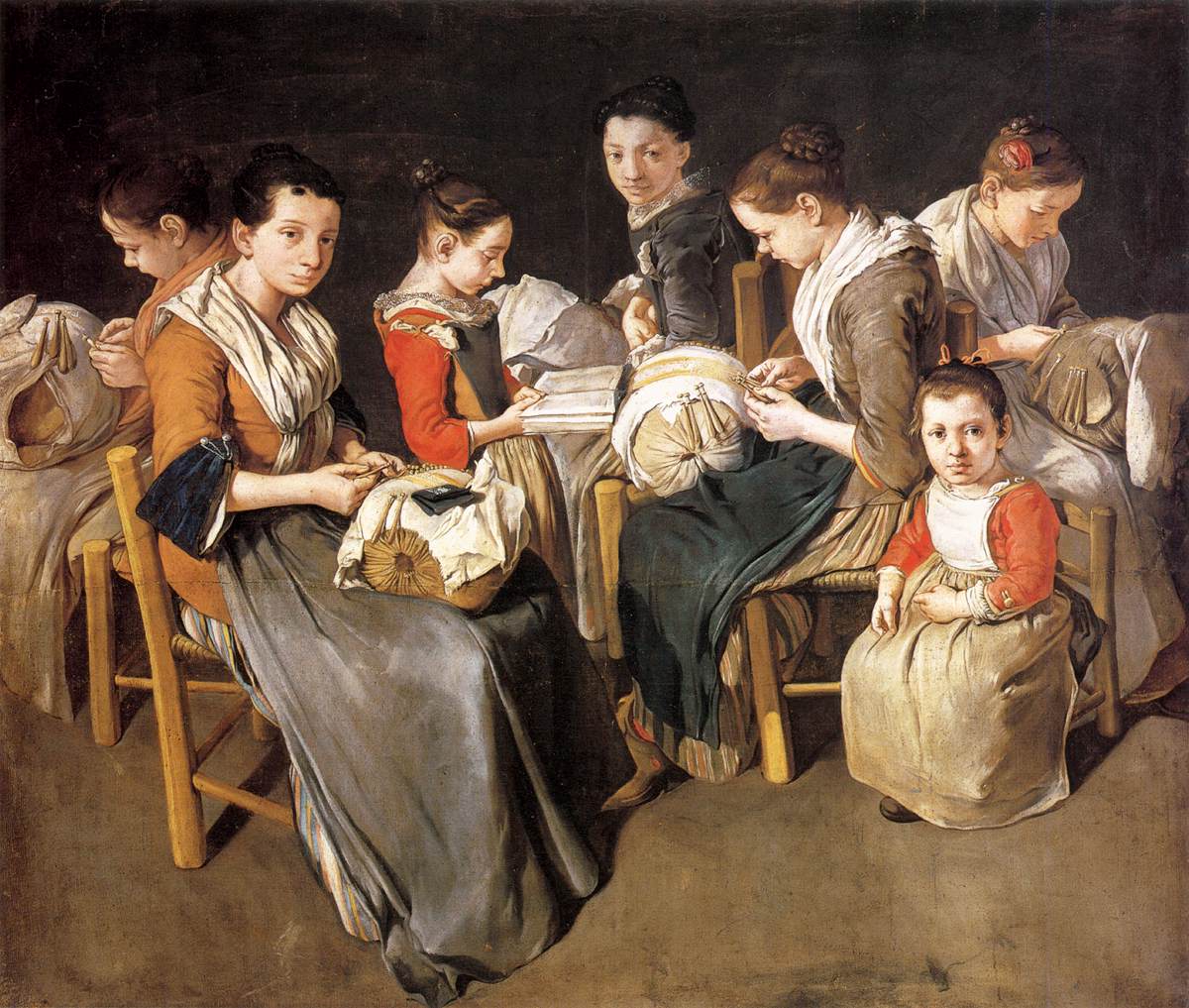
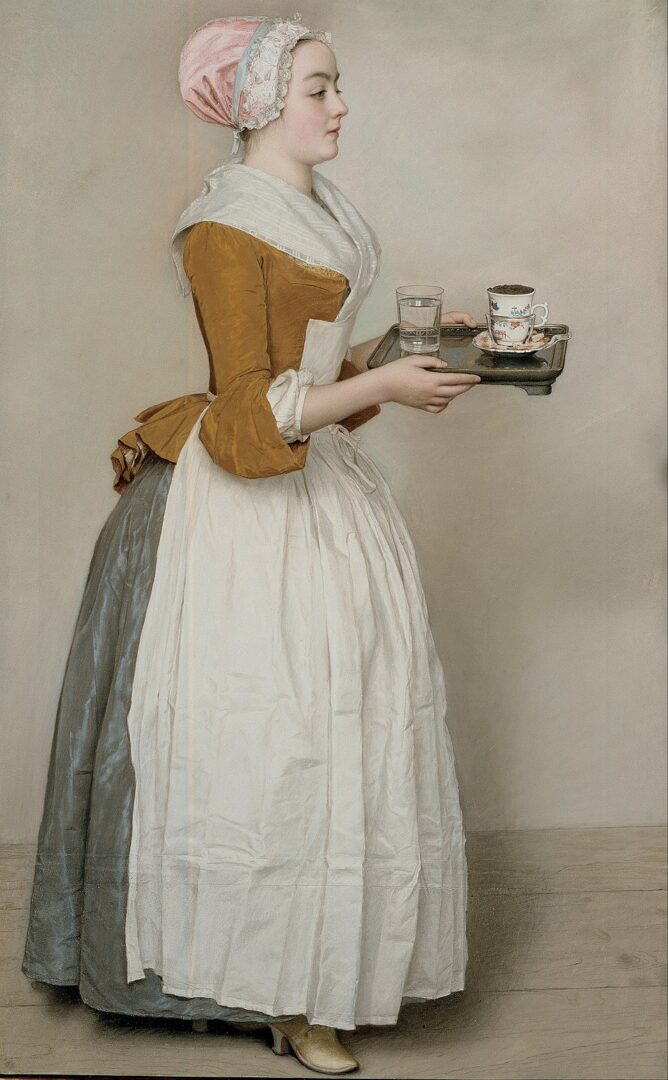
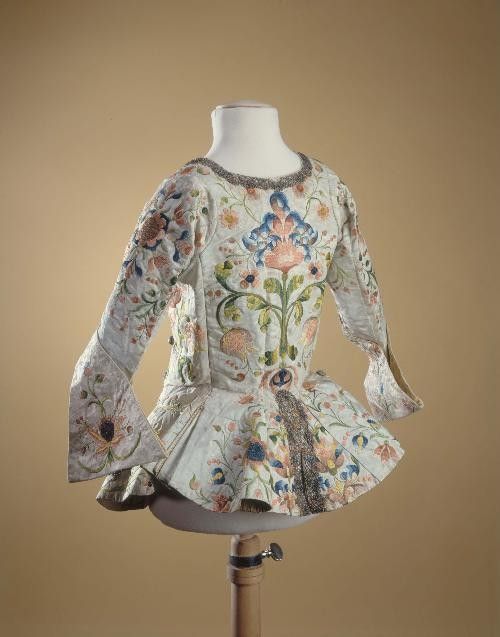
A Casaquin is short-length, closely fitted jacket. It was typically made from linen or silk and worn by working-class women as well as upper-class ladies.
Women Working on Pillow Lace (The Sewing School) by Giacomo, Ceruti.
The Casaquin is similar to other 18th century jackets such as the Caraco (A longer jacket that hits the mid thigh.) Pet-en-l’air (Features Watteau pleats in the back.) and the Pierrot (A short jacket, cut to the waist, with a peplum on the back.)
You generally see the term Casaquin used primarily in the first part of the 18th century and Caraco used in the second half.
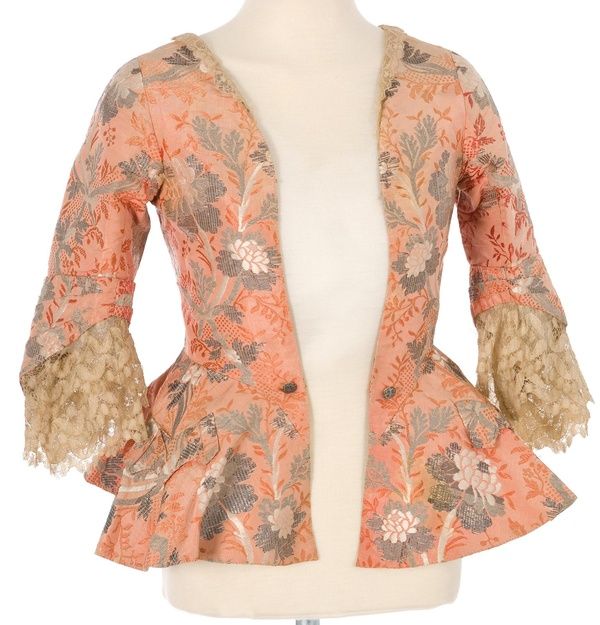
The Hallmarks Of A Casaquin
- It is a relatively short jacket
- Features a fitted bodice
- It could be laced or pinned closed
- It was sometimes worn with a stomacher
- Sleeves varied but were most often 3/4 length
- Sleeves often featured a Wing or Sabot styled cuff.
The Casaquin was always paired with a petticoat (the term for an 18th century skirt).
Patterns
I have not made this particular jacket myself but you can find other examples from sewists on Pinterest.
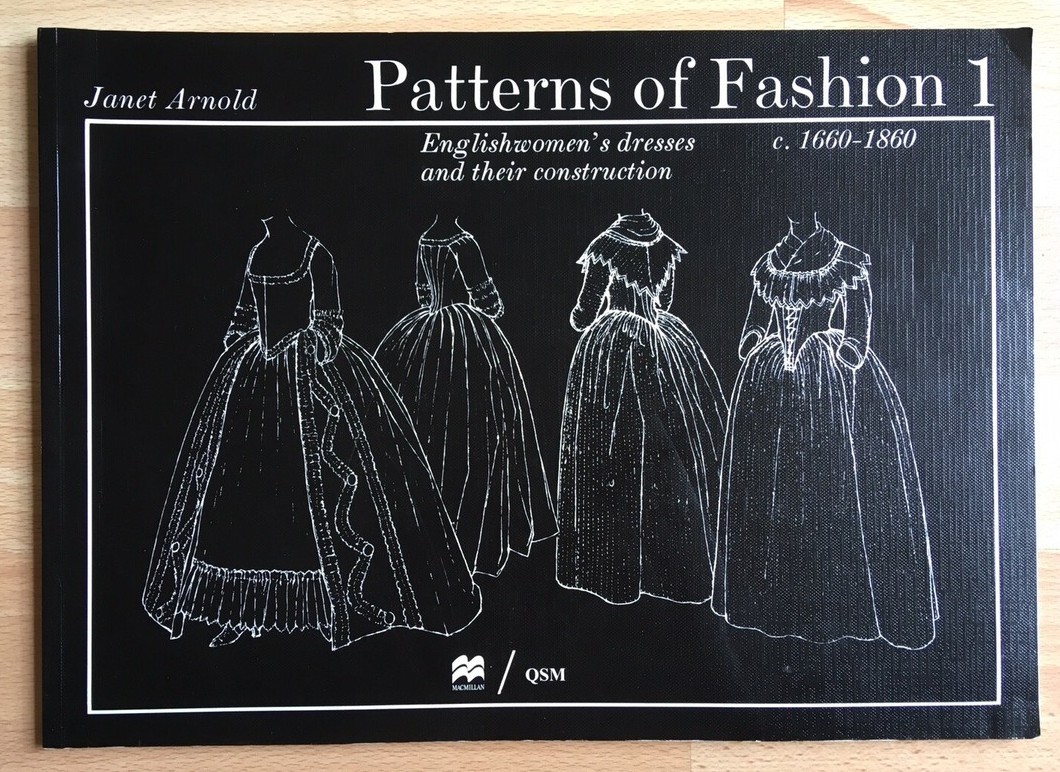
Another pattern that is available that I have not sewn myself is Nehelenia Patterns Casaquin 1740-1780.

1750s Casaquin Jacket
I have plans to create a few pieces dating to the 1750s when Mrs. Washington (then Mrs. Custis) had her first portrait painted.
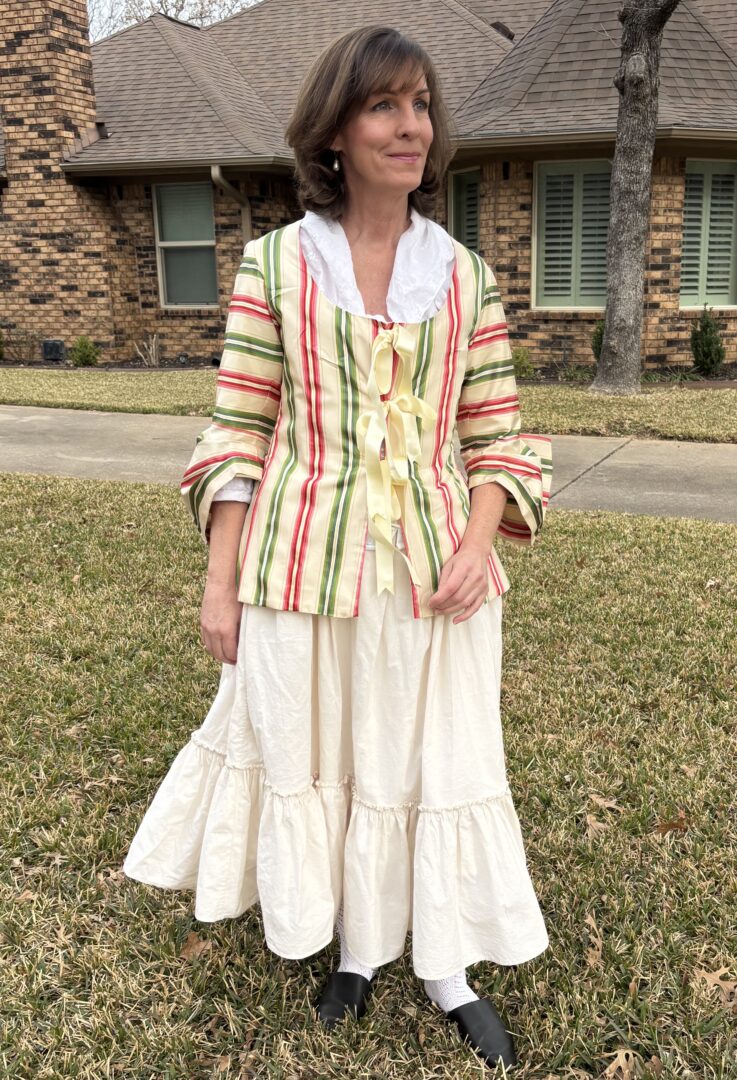
It is absolutely quite possible that Mrs. Washington would have had one, if not several, Casaquins in her wardrobe.
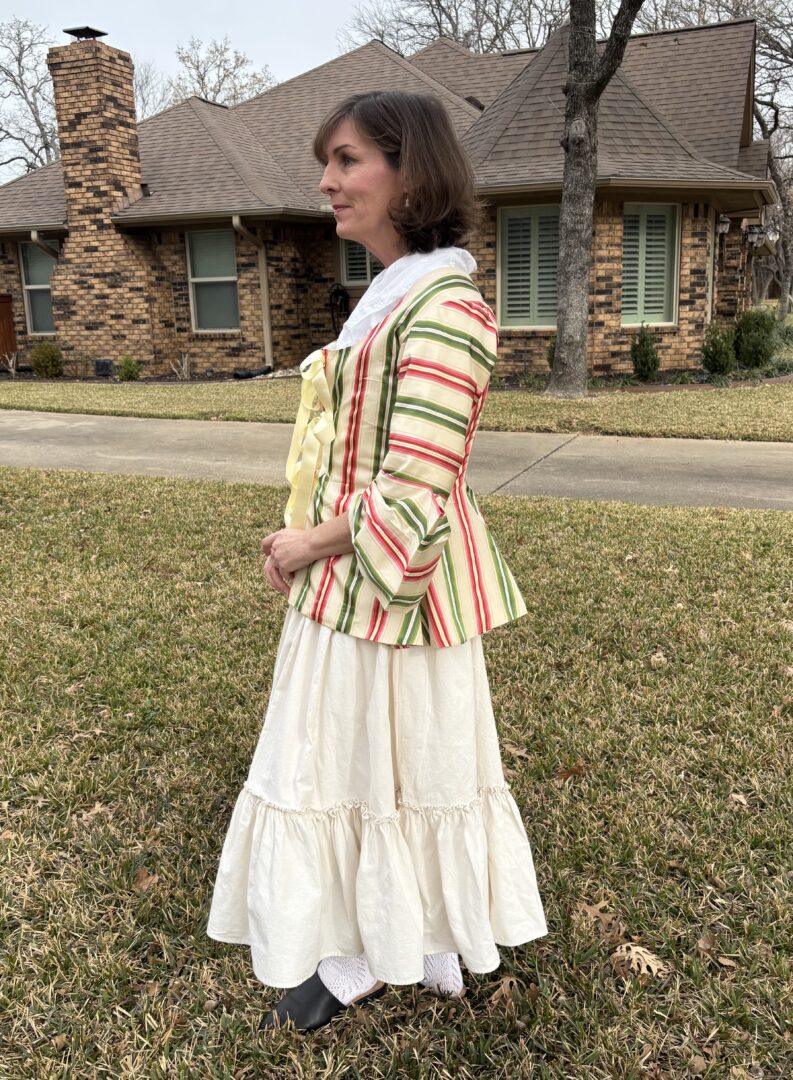
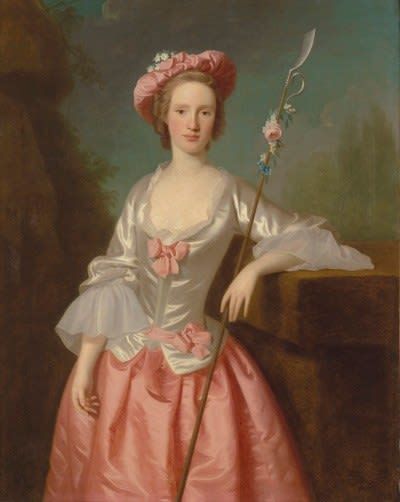
I will be making a gold silk petticoat (exterior skirt) to pair with this Casaquin as we know for a fact, based on her portrait above, that she owned a gold silk petticoat.
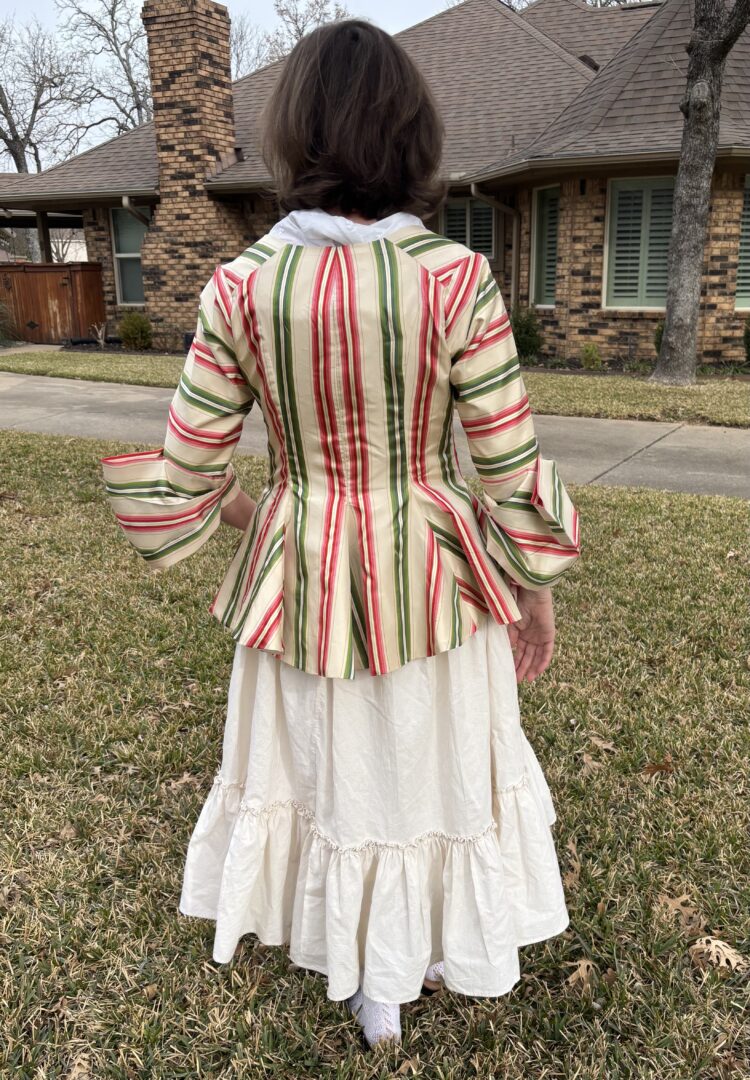
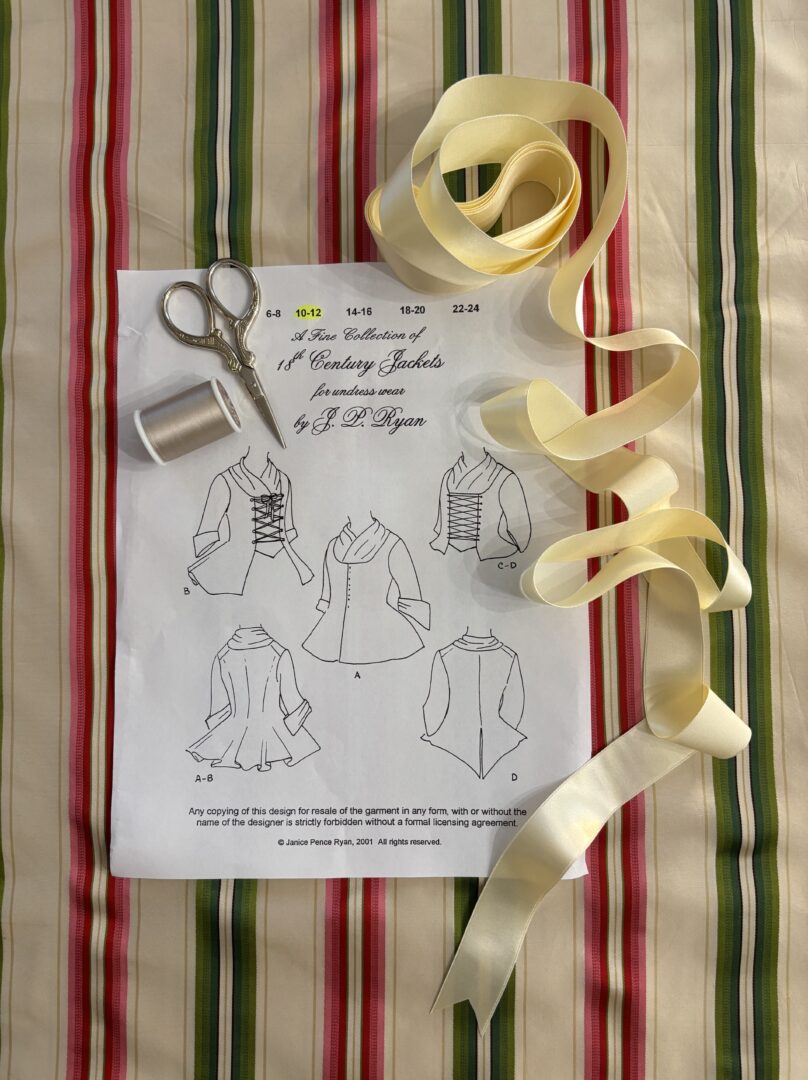
The silk fabric that I used has a thin gold line in the design. The fabric came from The Mad Anachronist who specializes in historical fabrics. You can find striped silk on sale for around $25 a yard. This jacket, using a 60″ (152 cm) wide fabric, requires two yards.
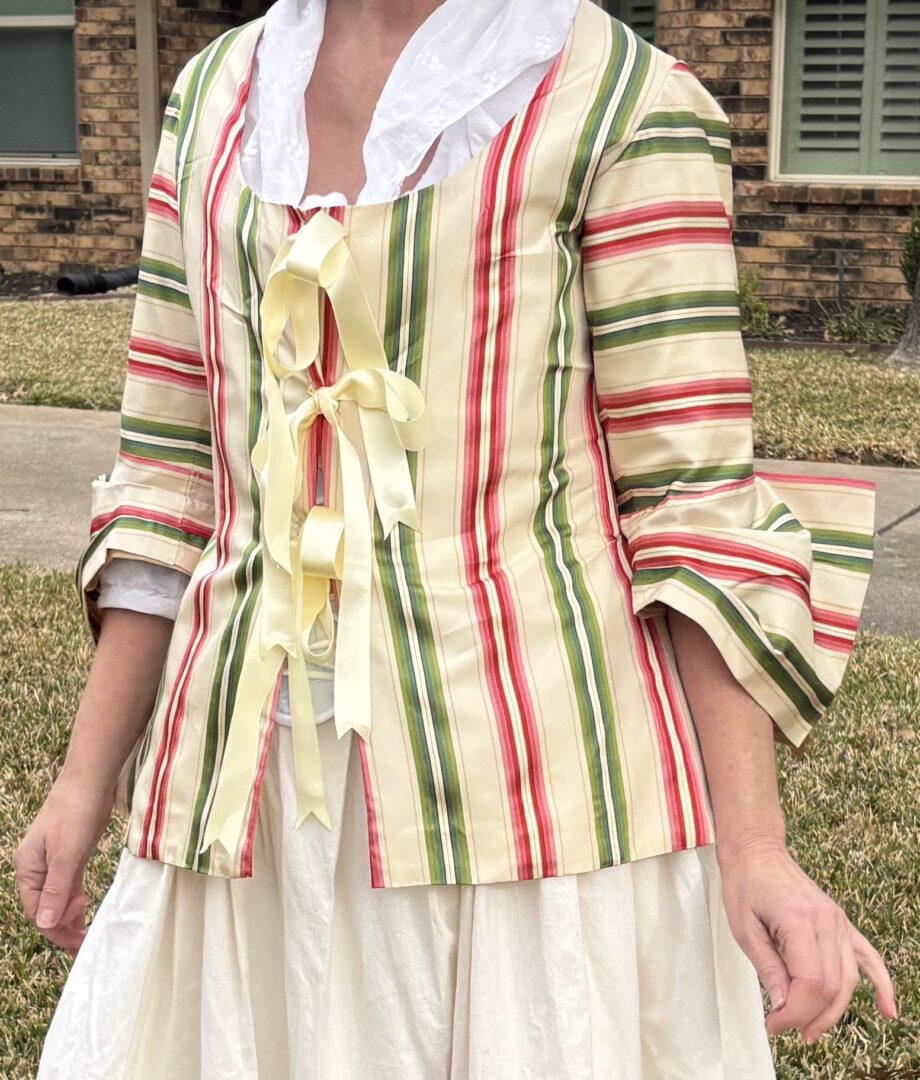
The hidden seams were all sewn on my old Janome sewing machine. But any visible stitching, such as on the wing cuffs, was done by hand.
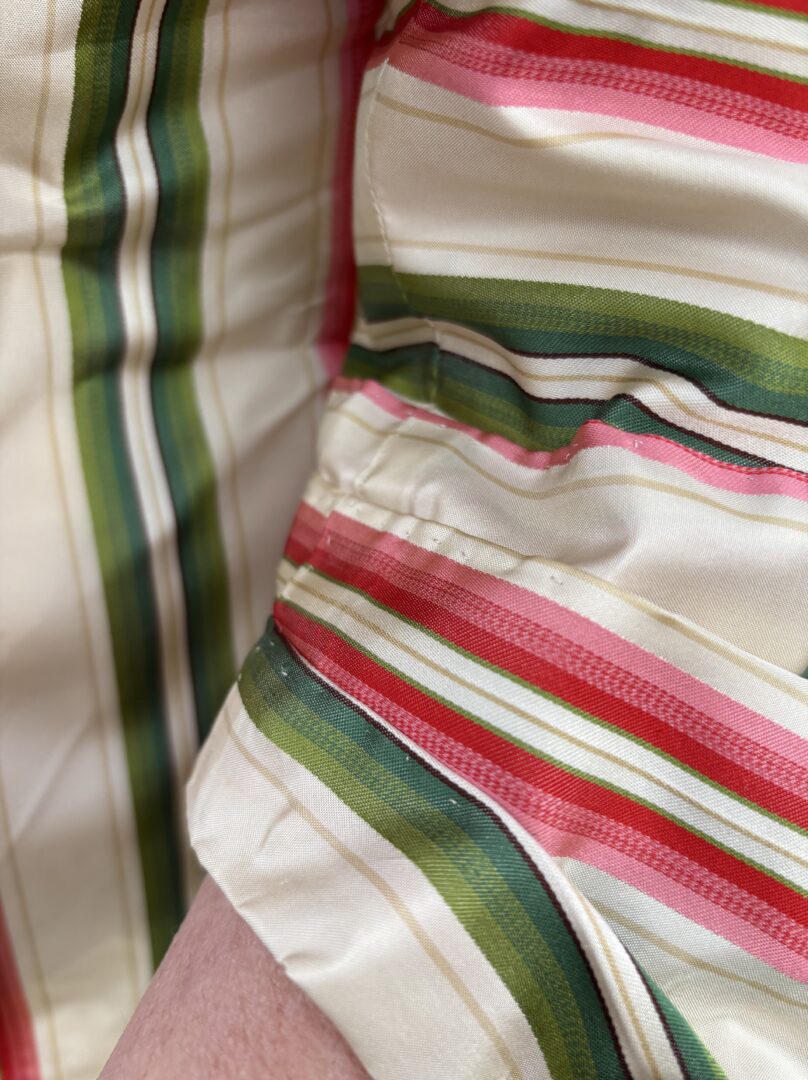
Total cost including the pattern, fabric, ribbon, thread and lining: $120. Hours of labor: about 10 but it could be shortened if done all on a machine. Given that this collection will be used for somewhat educational purposes I felt that it was important to use hand sewing as the sewing machine was not invented until the 19th century.
This Week’s Video
If you wish to view the video in a larger format just click on the black box in the lower left hand corner that says Watch on YouTube.
Have a lovely day,
Laura
The casaquin jacket is so pretty and very flattering. We really need to bring these back in fashion
I love it when you share the history of costume/garments and especially with so many wonderful images both from history and of your own work. I’d never heard of a Casaquin before, so I learned something new! I love the colors you chose. I can see why you skipped the machine to do it by hand — a big deal but historically more important!
You are such a busy bee, I can’t imagine how you get it all done!