Hello sweet friends, today’s post will focus on Late 1860s Undergarments. It is part of the ongoing Lessons With Laura ~ Summer of ’69 series. This will be a simple overview based on research for what a pioneer woman might wear.
Late 1860s Undergarments
Here are some of the undergarments that might be worn by a woman in 1869.
Just like our undergarments today there were a wide variety of styles to choose from.

It’s possible that a woman on the frontier would forgo a cage crinoline and split drawers (seen below) and just wear a petticoat or two.

There were a wide variety of crinoline styles. Some were more in elliptical in shape (longer in the back) while others were more bell shaped.

The overall shape of the crinoline changed with the fashions as shown in this article below.

First Layer
The first garment to be put on was a chemise. It would guard against perspiration, body oils, and would be changed if not daily, quite often.

Necklines could vary as well as the type of trim used.
From Magyar Bazár 1869.

Next, a pair of split drawers would be donned if the person chose to wear them. Drawers were optional.

 Magyar Bazár 1869

Then came the corset. Again, there were a wide variety of shapes and styles to suit all ages and figures.
Note* the corset marked “G” and “J” were worn by children and young teens to provide support. We see similar styles worn by Laura and Mary in the new adaptation of Little House on the Prairie.
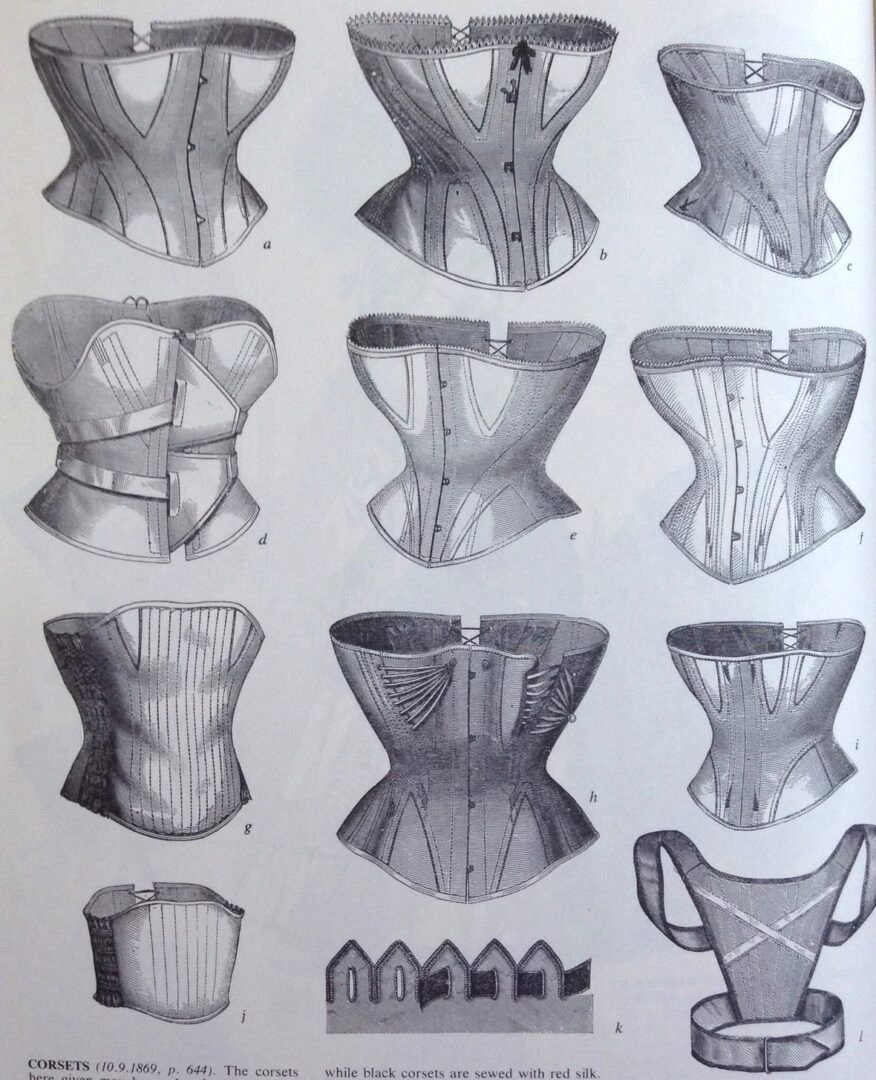
Corsets, when custom made to the wearers measurements, are quite comfortable, provide excellent bust support and help distribute the weight of the petticoats and skirts so your back will not hurt.

A Corset Cover
Recently I wrote a post, 1860s Sheer Dresses, and it featured dresses that a woman might have worn in the summertime.

For those wearing a sheer dress a corset cover was a must. It provided modesty as well as smoothing out the lines of the corset.

Corset covers could be found in a wide variety of styles and various trims could be used.

Petticoats
Last was the petticoat. Often, more than one was worn. The shape could range from an elliptical style (with a longer train in the back) to a bell shaped style.

Narrower petticoat skirts were also an option.
Tucks at the hem were both decorative and practical. The tucks created fullness at the hem to help support the outer skirts.
In children’s clothing tucks were sewn into both undergarments and clothing so they could be let out to make the garment longer as the child grew.

The decorative finishes on a petticoat could vary from elaborate to quite simple depending on the wearers financial means.
But a pretty petticoat was something to be proud of.

The Patterns I Used
Back in 2021 I had sewn a chemise to wear under my 1840s inspired gown.
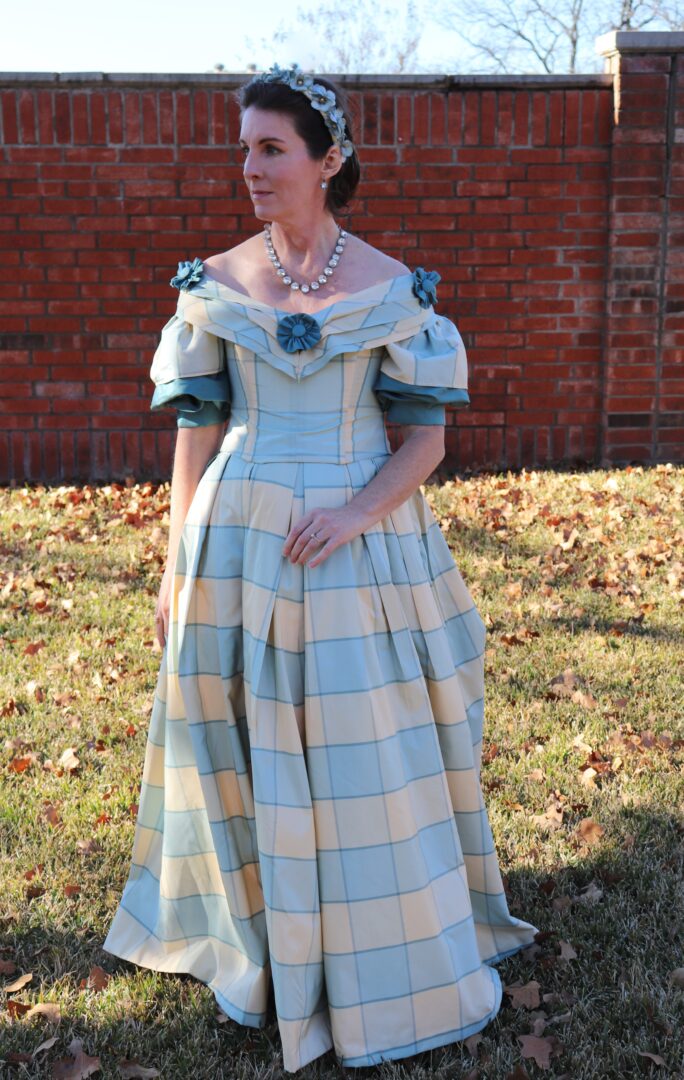
I had used Simplicity pattern 9769 which was picked up second hand at a thrift store.

The pattern has been updated and can be found on the Simplicity site under pattern number 1139.

For my corset cover I followed this extant pattern.

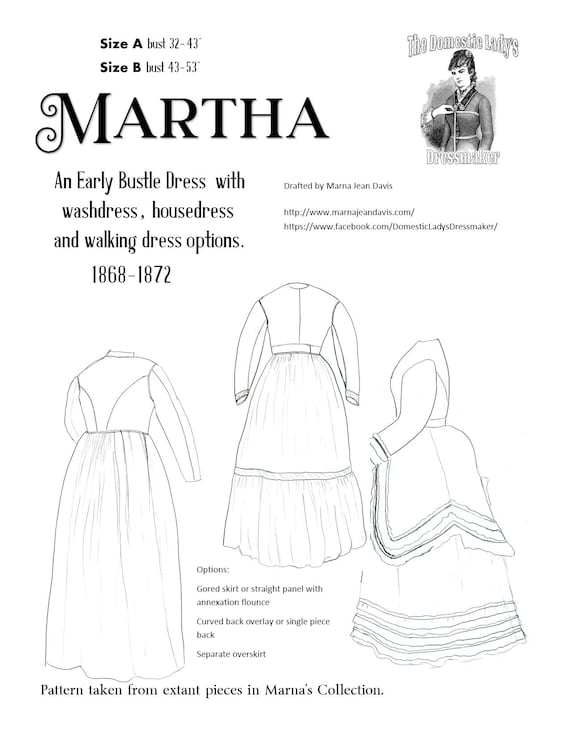
For the petticoat I used the skirt pattern that I am also using to make my 1869 sheer dress, Martha by Marna Jean Davis.
On a lovely day, when the prairie breezes were blowing, I dressed my mannequin in the corset cover and petticoat.
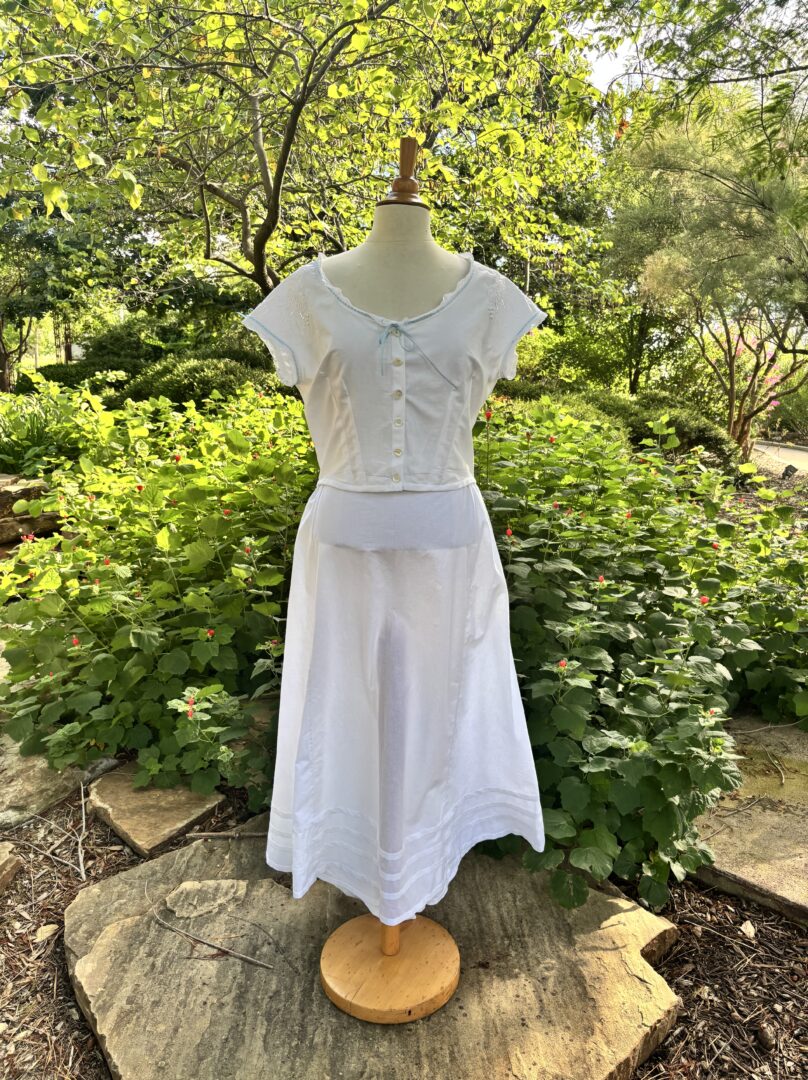
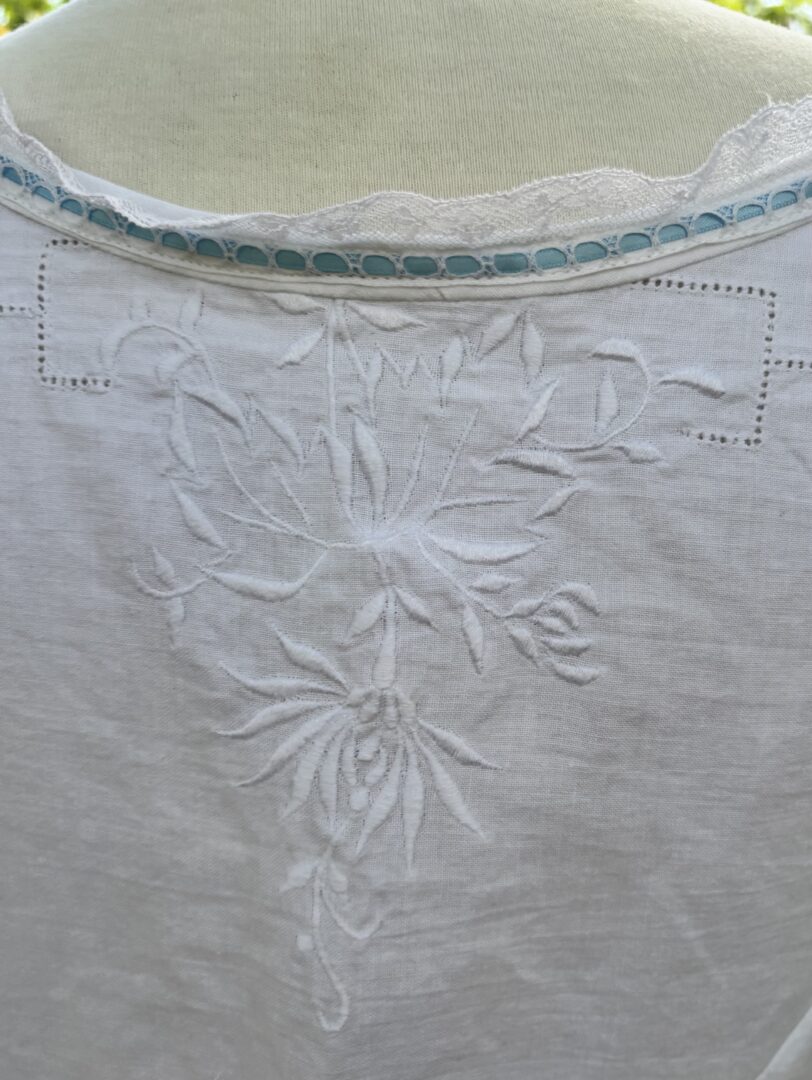
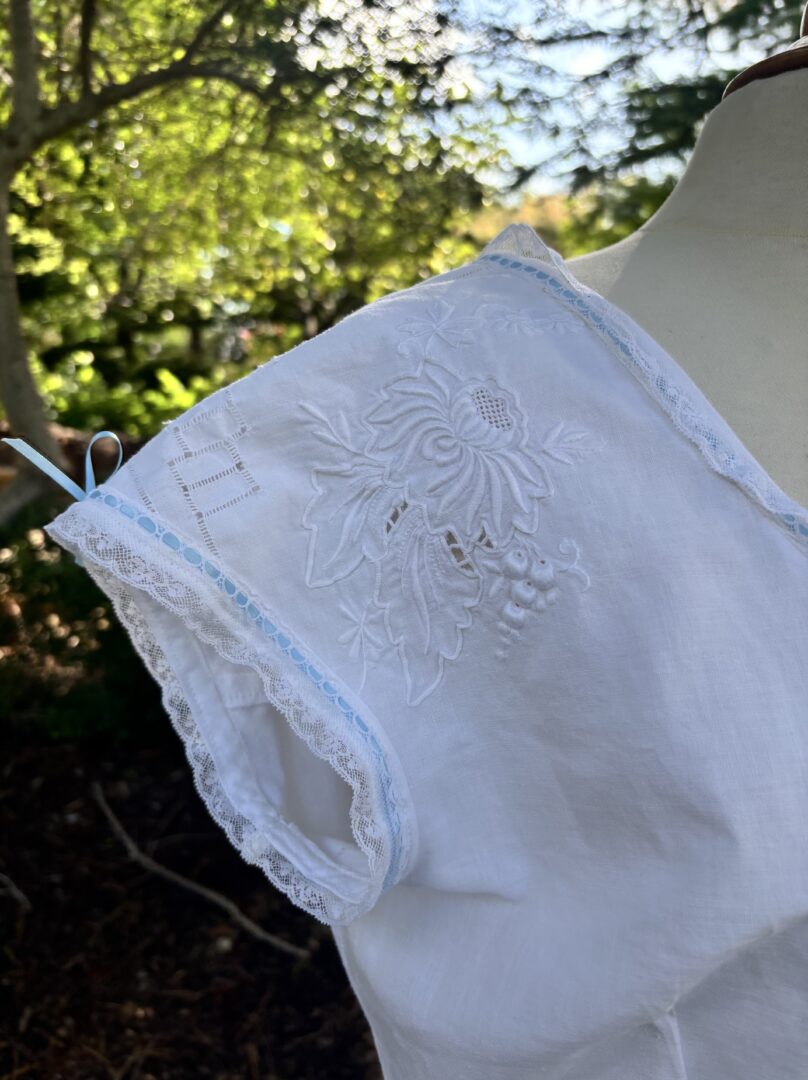
I shared in this Instagram reel that the corset cover is made from a set of vintage embroidered pillowcases.
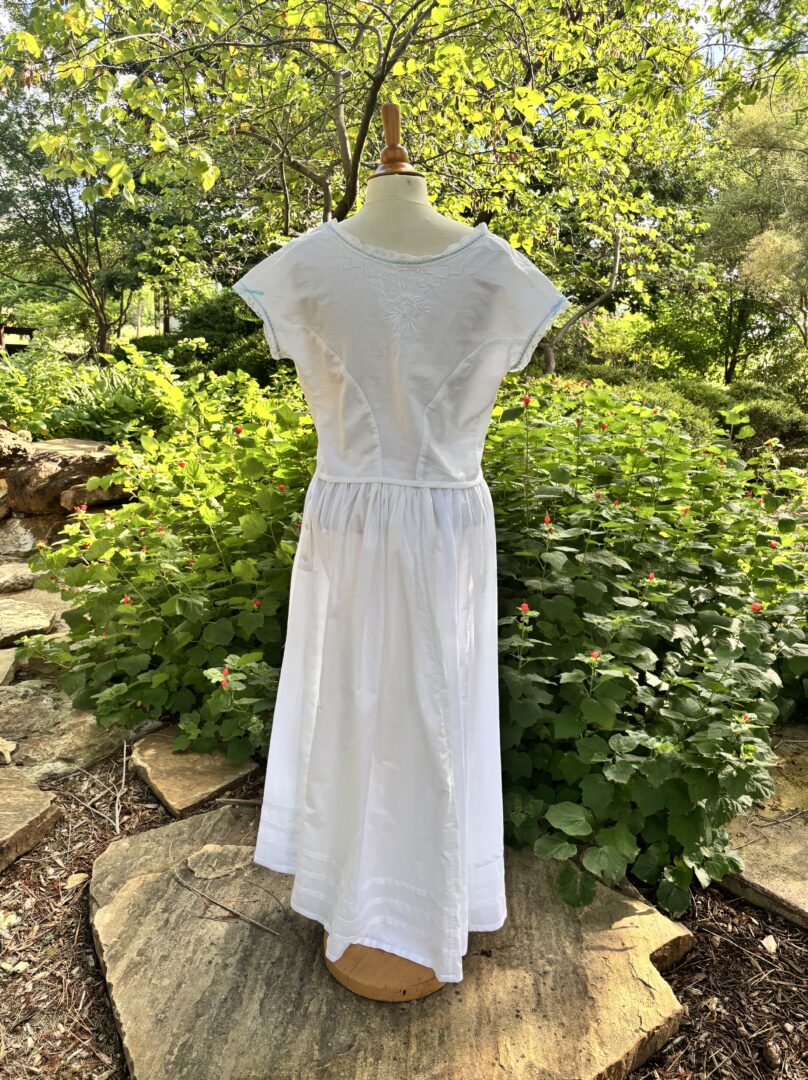
It’s sort of a cheater method to create beautifully embroidered garments.
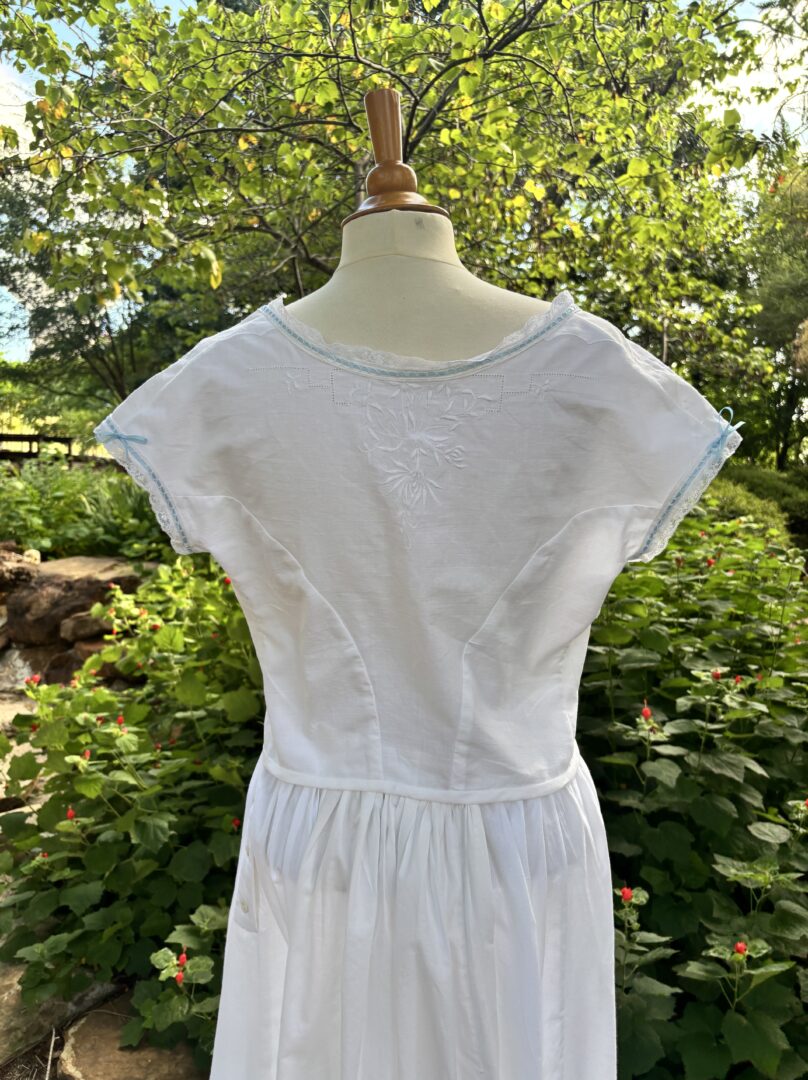
As with all my historical garments I try to add an antique element or two. The corset cover features Edwardian era lace and bone buttons.
These sweet touches delight my heart.
Little House Virtual Watch Party
I will be wearing these undergarments under the 1860s dress that I am making to wear to Thursday’s virtual Little House on the Prairie watch party.
PLEASE NOTE: Wednesday will be the last day that you can sign up. Just email me your email address at decortoadore@hotmail.com so I can send you the watch party link.
Additional information can be found in this post.
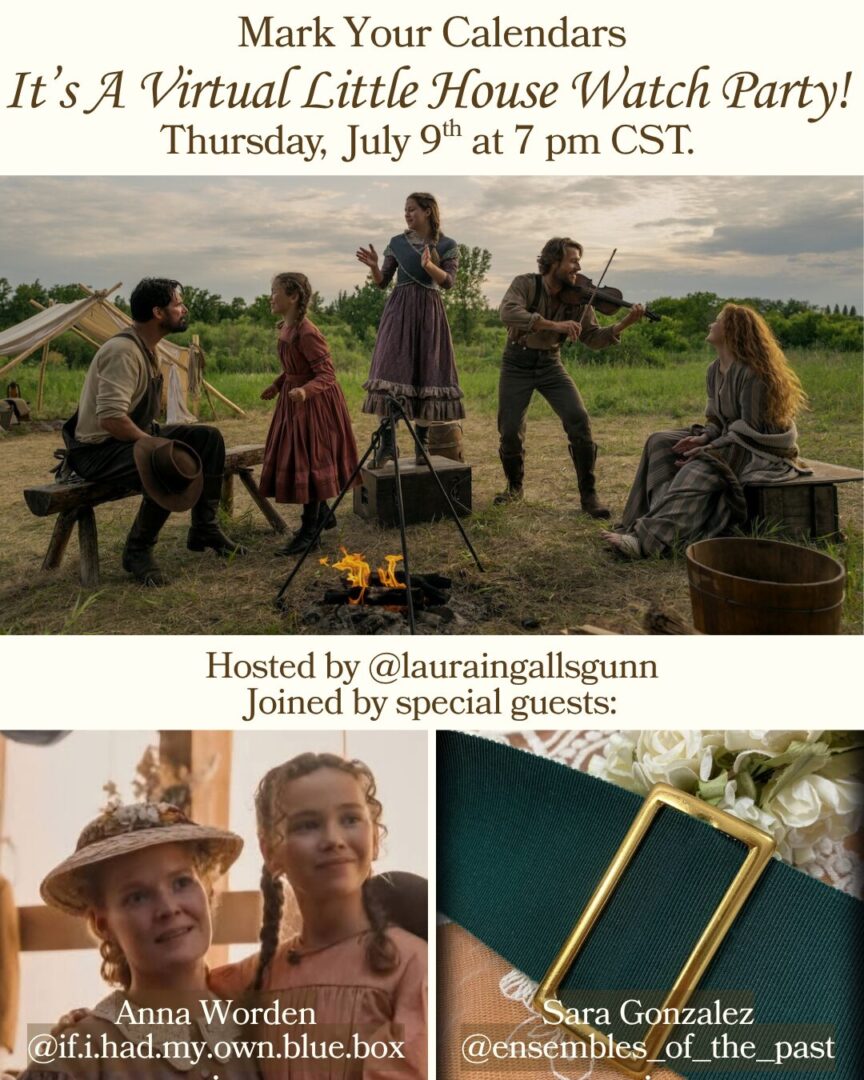
I hope you’ll join in the fun!
Laura