Hello sweet friends, the mercury has been steadily climbing in my neck of the woods. If I am at home I generally reach for a cotton shirt paired with capris or shorts.
But what would a woman in the mid 19th century wear? This post will take a look at 1860s Sheer Dresses.
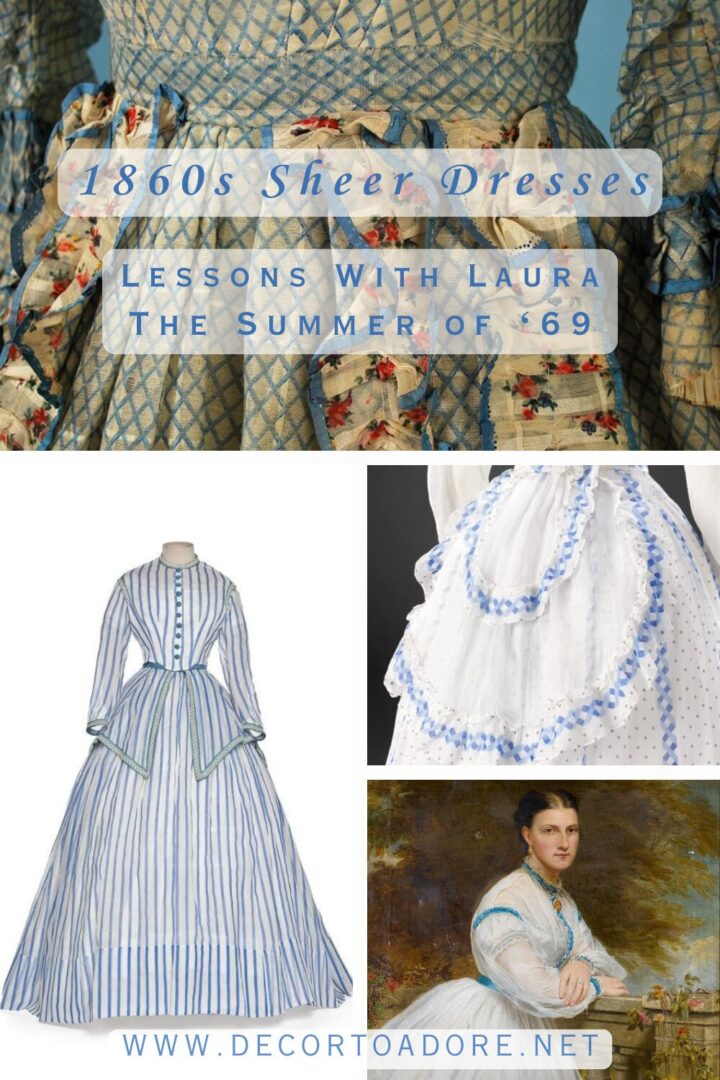
1860s Sheer Dresses
This post is part of the Lessons With Laura ~ The Summer of ’69 series. I plan on making and wearing such a dress when I visit both Walnut Grove, MN and Independence, KS this summer.
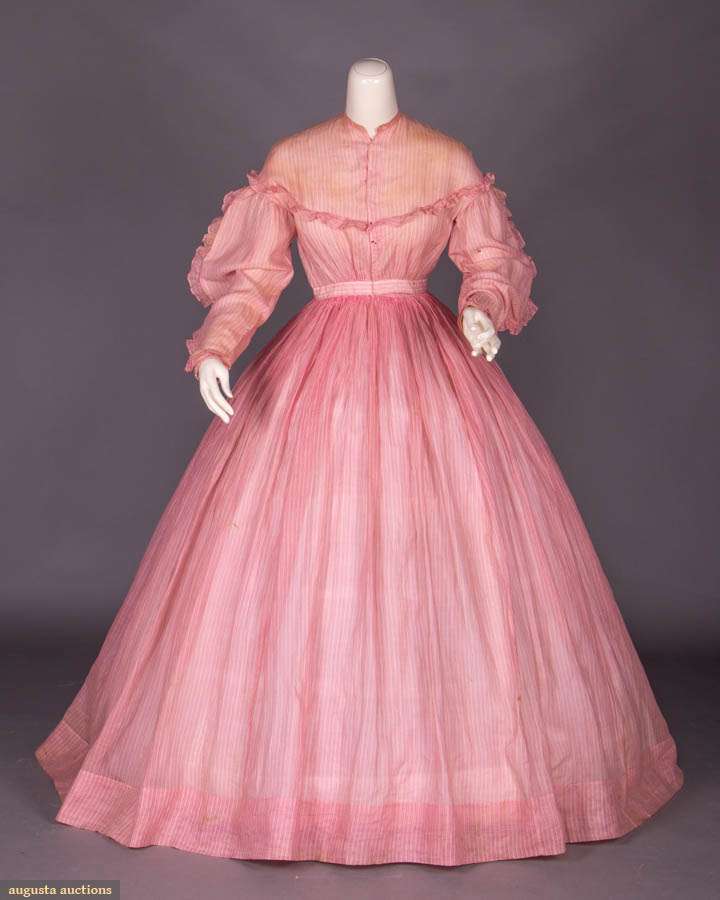
In the mid 19th century dresses made of sheer fabrics were worn in warmer weather.
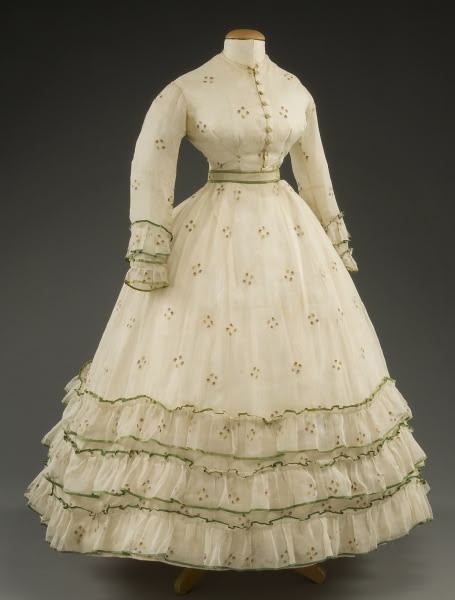
Novels such as Little Women and the Little House series mention sheer fabrics such as cotton voile, batiste, lawn and more.
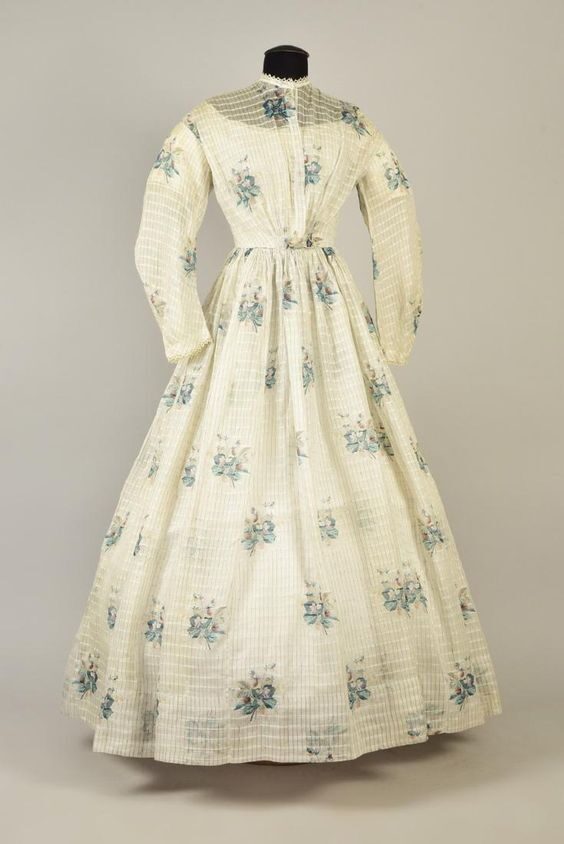
For modesty purposes in the early 1860s most dresses have a solid lining that was cut lower around the neck and shoulders.
This dress is a good example of such a lining. You can also see the piping added to the shoulder seam to create strength. Piping is created by placing cotton cording into a narrow piece of fabric that is often cut on the bias.

There are also some dresses that were totally sheer with the sewist using French or felled seams to enclose the edges of the fabric.
Corset covers and underpetticoats were then worn underneath for modesty.
The style and colors of the sheer dresses changed with the popular fashions of the day.

This lovely green dress from the early 1860s features a v neck and pagoda sleeves.

The offset shoulders have hand stitched ruching and the use of piping. Piping on a sheer dress was crucial as the fabric was light weight and therefore benefited from the strength that piping offered.

Late 1860s dresses most often feature bishop or coat style sleeves.
The sweet ruffled details on the back of this dress are so charming!

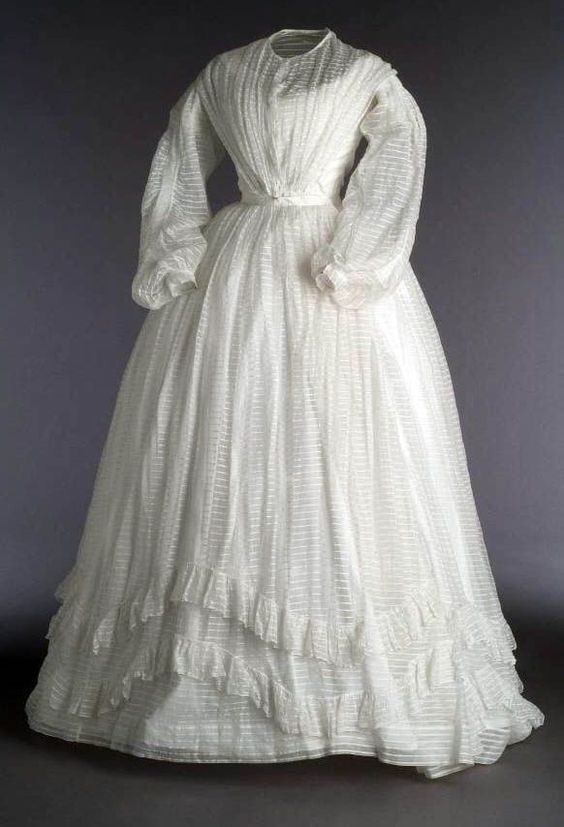
This later 1860s sheer cotton dress is a very simple style, free from adornments. It was probably worn by a woman of more modest means.

Sheer Dresses For Cooler Climates
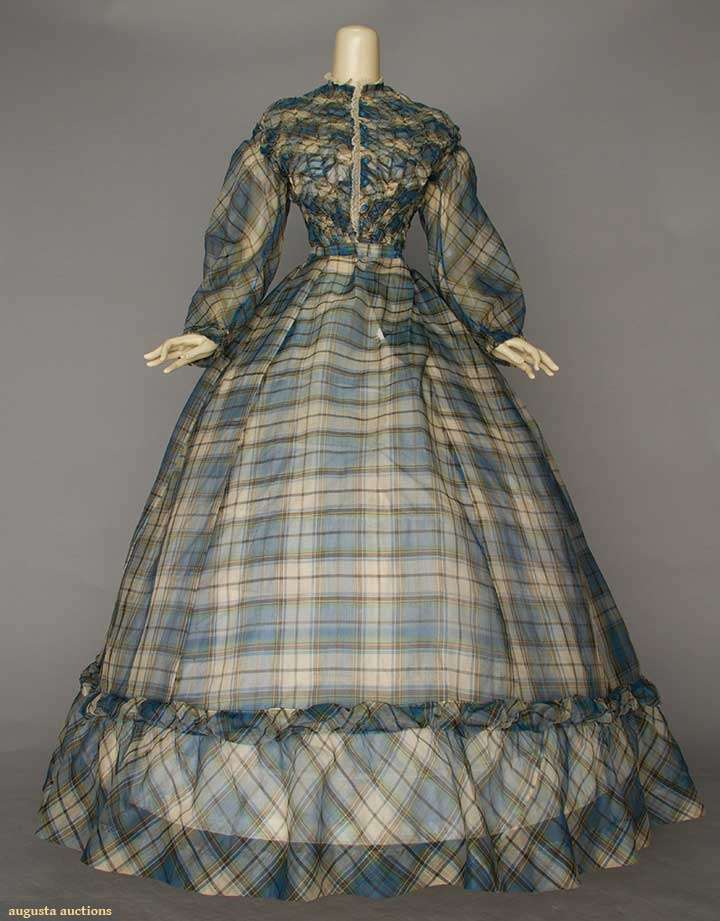
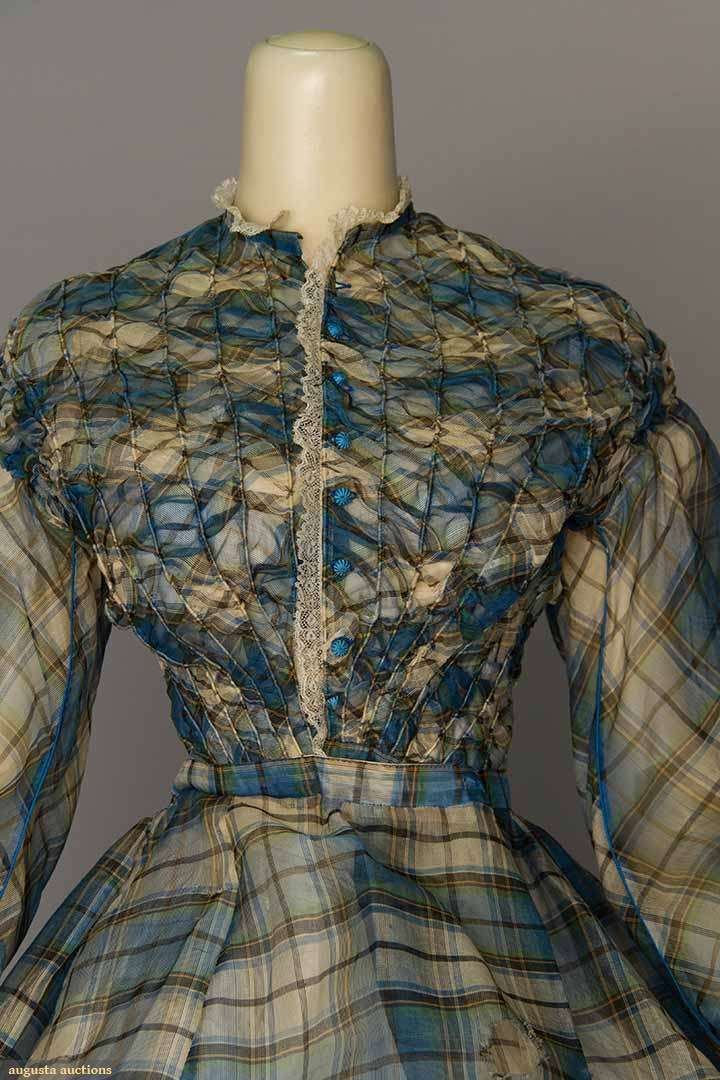
There were sheer dresses made from fabrics other than cotton for those living in cooler climates. This beautiful tartan is made from barège, a thin gauze fabric made from wool or a wool blended with silk or cotton.
The use of piping and ruching on the bodice is a spectacular design detail.
The exterior of this dress is made from piña cloth (pineapple leaf fiber) which I had never heard of. The under lining is made from silk. It was worn by Mary Francis Cook of Hyde Park, Mass. Her father, a sea captain, brought home the fabric.
Silk is the most insulating of all the natural fabrics. Meaning that it traps heat. So it is best to wear silk in cooler temperatures.

During the Victorian era dress fabrics were often sold with coordinating trims and notions. I imagine the floral print on this dress is a good example of this but I am not 100% sure.

This gorgeous gown, which was deaccessioned from Vermont institute, was made from a sheer wool challis.
Today, we don’t often think of wool as being sheer. Sadly, such fabrics are no longer being produced.
It is such a pity because there is one dress that I have been requested to recreate 100s of times and sadly, I will never be able to.

Ma’s Delaine
Literary note: For those that love Little House in the Big Woods Ma’s strawberry delaine was made from a sheer wool. The fabric is often referred to as mousseline de laine. The wool was sourced from the Delaine Merino sheep. The cloth was prized for it durability. The texture was crisp, yet lightweight and sheer. The sheer weave had the structure of worsted wool but with the breathability of cotton.
Ma’s dress would have been able to be worn year around. I think about Caroline placing the order for the dress from the New York dress maker. Delaine was a good choice for a versatile dress meant to last for years.

Sheer Delights
This excellent article shares a nice glossary of Victorian sheer fabrics.
Who Wore Sheer Dresses
Everyone wore sheer dresses.
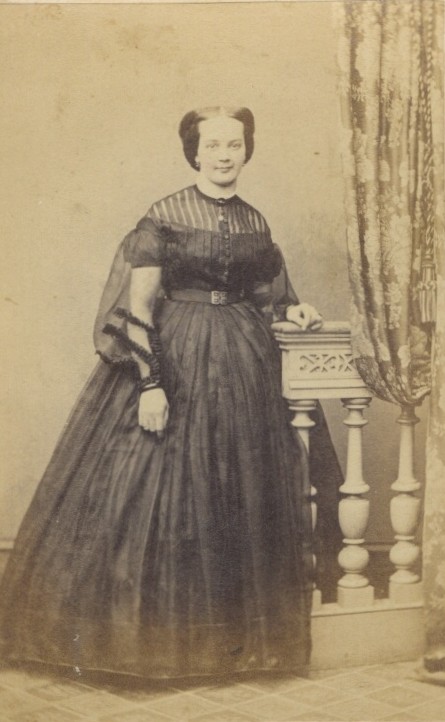
There are countless portraits and Carte de Visites (photographs) featuring girls and ladies of all ages wearing sheer dresses.

The large tucks featured in the skirt below assisted in giving the fabric body and weight. Tucks also provide structure to help keep the dress from clinging to the legs.

I would love to know what the original color of this printed sheer gown was. Often, we only think in terms of black and white but of course the extant (antique) examples show us that brightly colored fabrics were often selected.
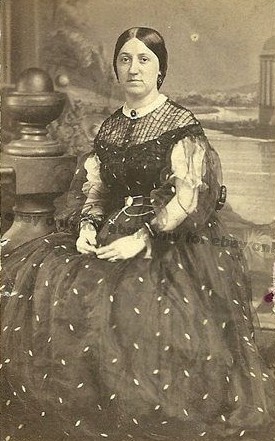
This image is my favorite. I just truly love all things gingham.

Short Sleeves and Other Styles
Sheer dresses came in numerous styles. Some featured short sleeves.

You see short sleeve styles primarily worn by younger ladies and girls.

There were also dresses that sometimes only had a sheer bodice and sleeve overlay. The rest of the dress was made from a heavier fabric.

This is such a pretty dress.

Brooches and belts were often added to these lovely ensembles.

Sheer Waists
Blouses of this time period were called waists. You can often see waists made of sheer fabrics.
This was an easy way to change the look of a dress or make an evening dress wearable in the daytime.
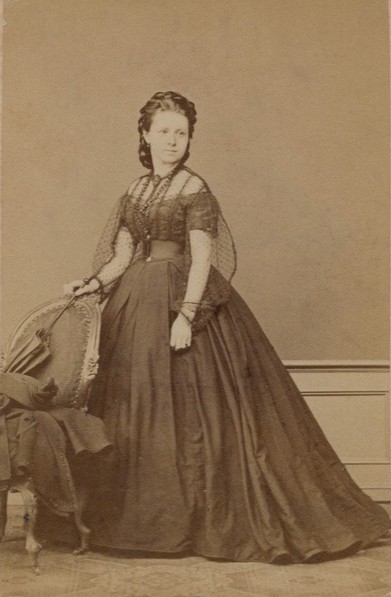
Sheer waists were often worn with a belted accent called a Swiss waist.
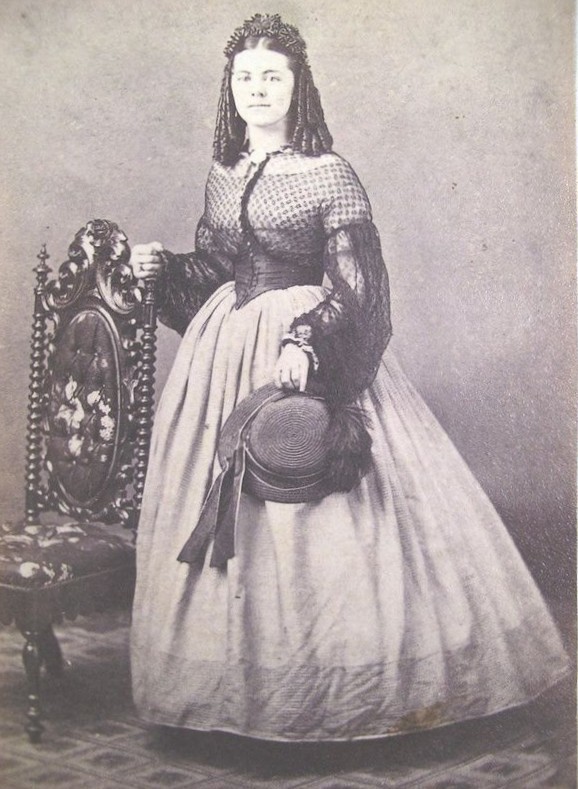
Two Piece Sheer Dresses
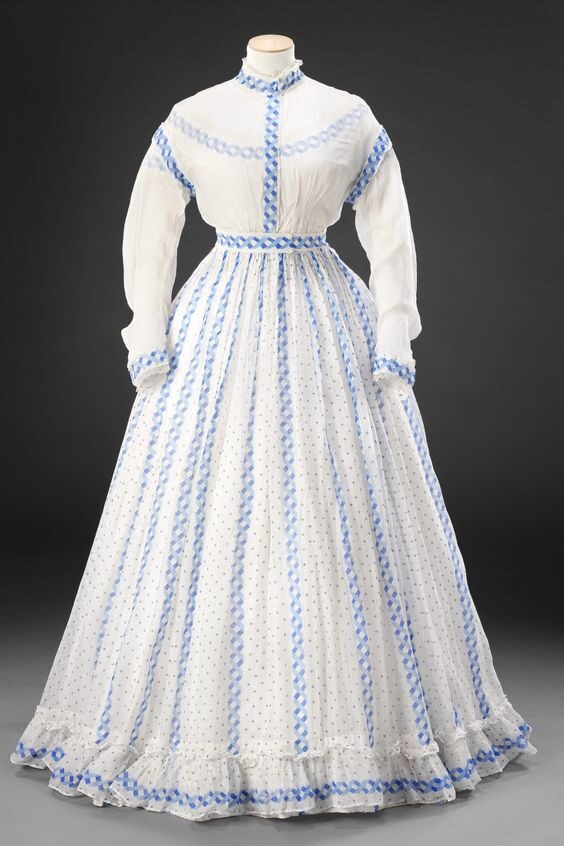
As the decade of the 1860s came to a close two piece sheer dresses became fashionable. This girls dress is just darling. I have wondered if it is similar in style to Nellie’s white lawn dress in On The Banks Of Plum Creek.

A separate bodice (basque) and skirt was popular through the 1870s which is also known as the Natural Form or second bustle era.

My favorite of these fashions are from the 1868-1872 period. Such cupcake confections!

The blue and white color palette on this gorgeous gown seems so cool for the hot summer months.

Dress Inspirations
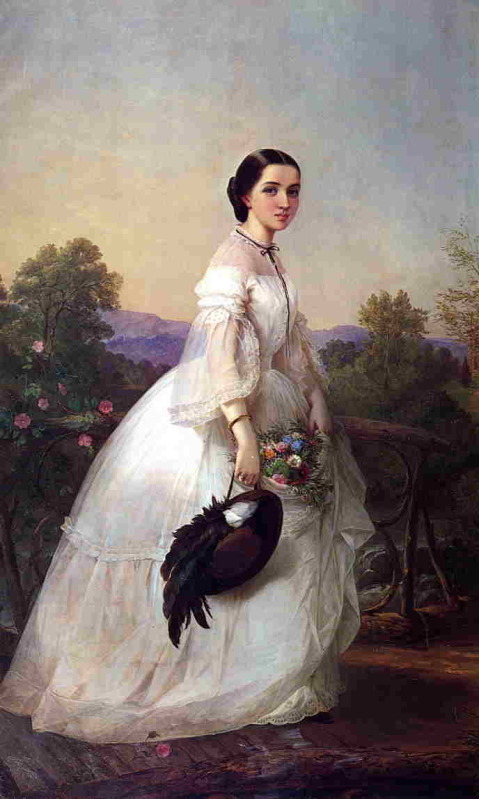
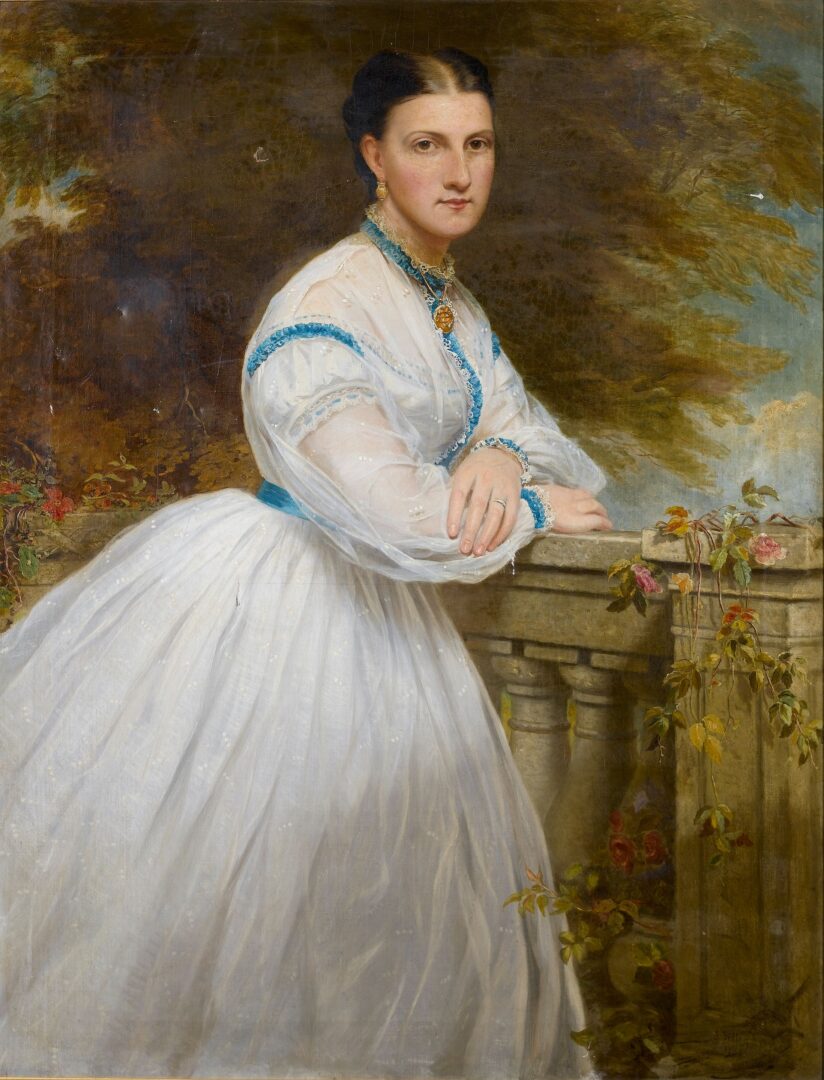
Over the weekend, on my Instagram channel, I shared a corset cover that I am currently making. It will be white with lace and blue silk ribbon sewn on the short sleeves and neckline. Very similar to the visible corset cover in this gorgeous painting.
Portrait of a Lady, by Samuel Sidley
In keeping pioneer frugality and the Ingalls family in mind I think a simple style, free from embellishments, could have been something that Caroline Ingalls might have worn to church or town.
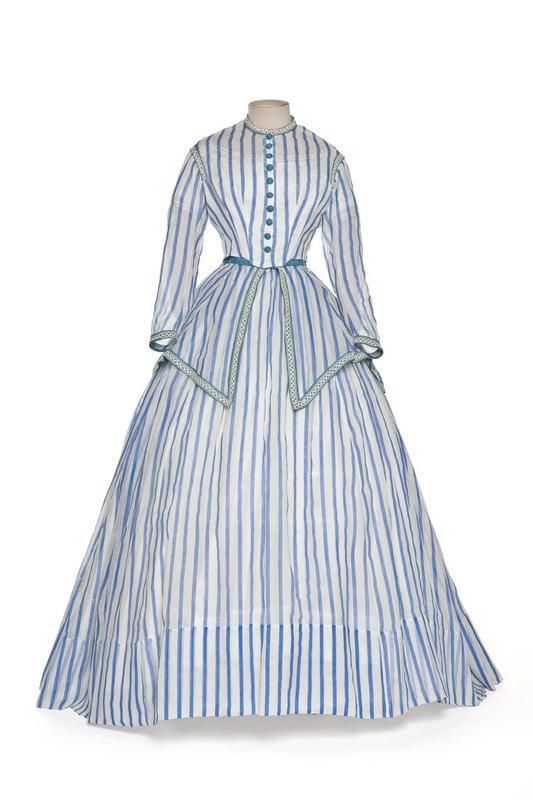
It will be so nice to have a light weight dress to wear to various Little House events.
The first will be at the Laura Ingalls Wilder museum in Walnut Grove, Minnesota on July 17th and 18th.
On Saturday, during the day I will be at the FREE community event in the park.
On Saturday evening a wonderful Heartfelt C0untry Party is being planned with a delicious dinner. You can purchase tickets HERE.
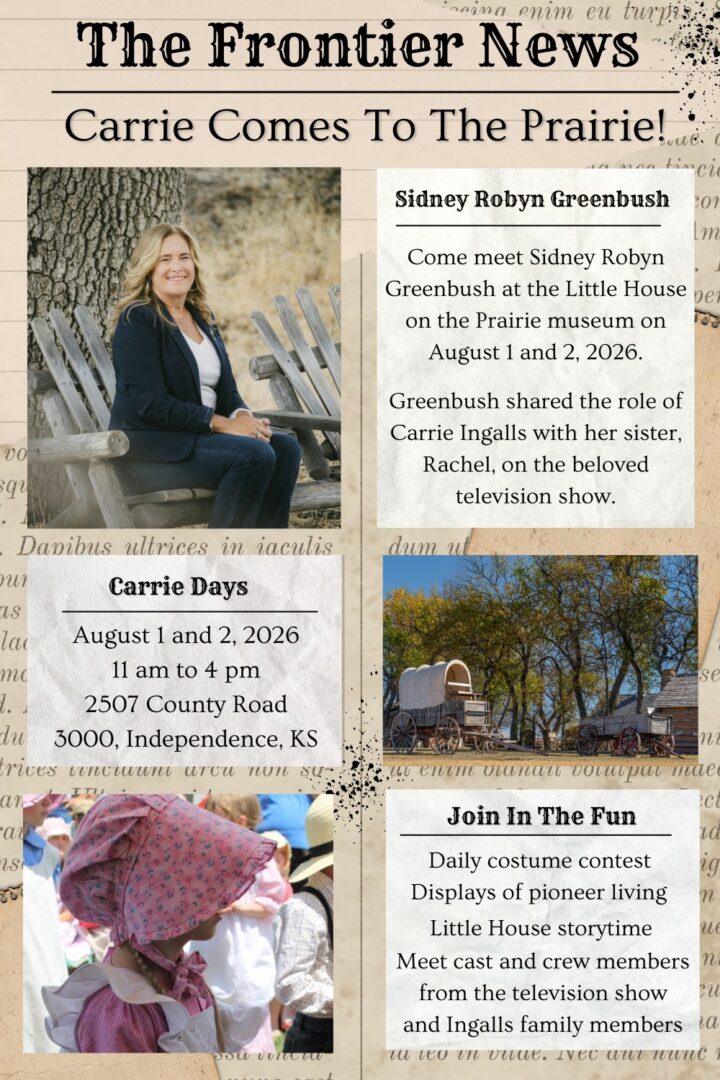
Then on August 1 and 2 from 11 am until 4 pm I will be at the Little House on the Prairie museum in Independence, Kansas.
The event is free. If you wish to visit the museum the cost is just $5 for adults.
I’ll be back later this week with an Ingalls family recipe.
Laura
In Case You Missed It
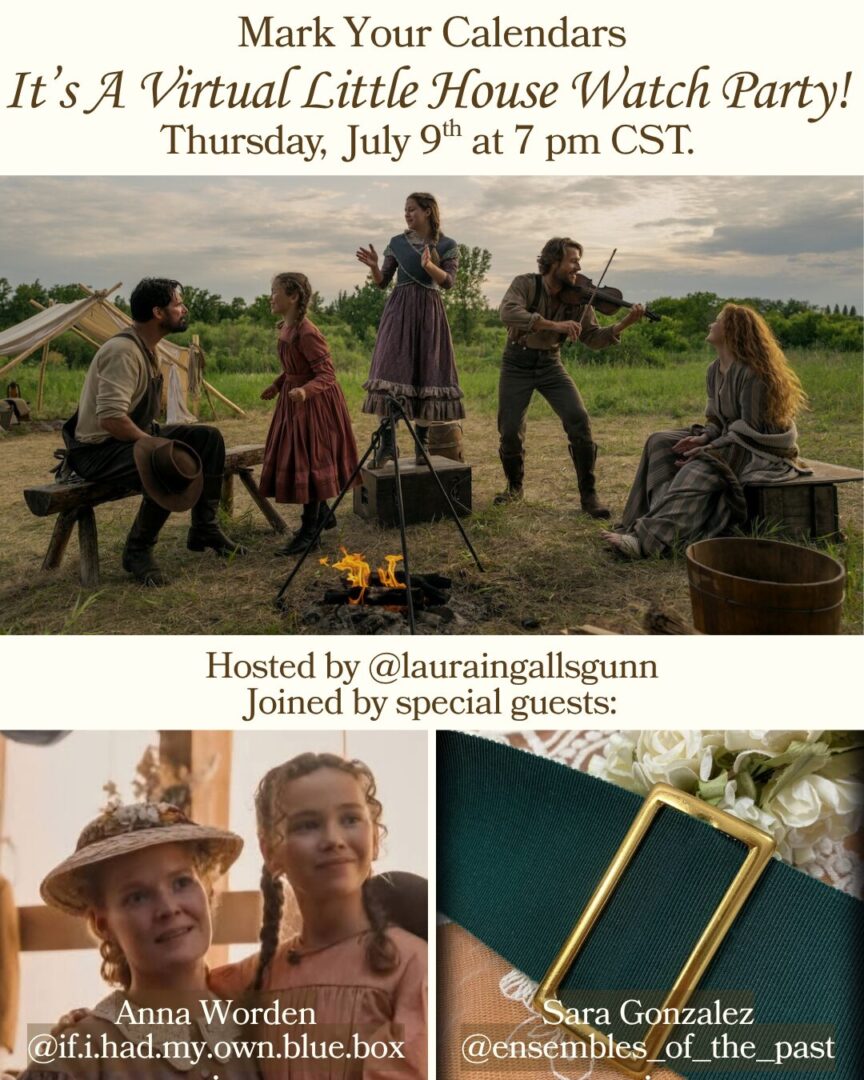
Yesterday, on Instagram, I announced that I will be hosting a virtual watch party for the new Little House on the Prairie on Thursday, July 9, 2026.
I will be joined by two very special guests:
Milliner (hat maker) Anna Worden, of If I Had My Own Blue Box, who has created some beautiful hats for the new series.
Fashion historian Sara Gonzalez, of Ensembles of the Past, provided beautiful reproduction fabric and notions used to create some of the garments worn in the show.
To join in the fun you will need to have a Netflix membership (this is where the new series will be shown). A few days before the event you will need to sign up on Teleparty which is a free service that allows watch parties.
For now, you can research all the options and learn more simply by doing a search on Google.
The first post of the new Lessons With Laura series:
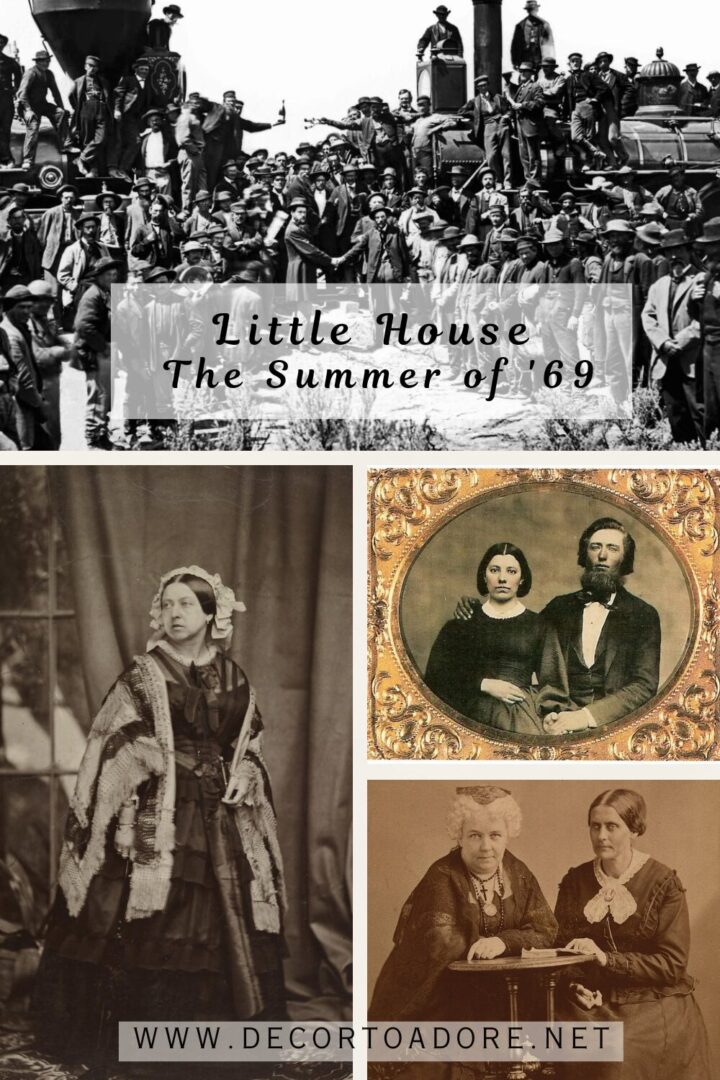
Little House The Summer of ’69
I still can’t imagine how these women got by under all those layers of fabric in the summer. But then, “Horses sweat, men perspire, but ladies glow.”
The dresses are so beautiful! Thanks for sharing them with us. I’ve seen dresses that you have made that are amazing. You are so talented!
You answered the question that popped into my head as I was reading this post……did women ever wear short sleeves? So only younger girls would wear short sleeves? Interesting…..No wonder ladies were always fanning themselves!!
These sheer dresses are simply gorgeous!
These are gorgeous gowns but wow — even with the sheer, I think you may be plenty warm! At least if there’s a breeze it will blow “up’ those beautiful skirts!