Hello Laura Ingalls Wilder friends. Today kicks off a new Lessons With Laura series ~Little House The Summer of ’69. The inspiration for the title is the year that the Ingalls family left the big woods of Minnesota and headed to the Little House on the Prairie located near Independence, Kansas.
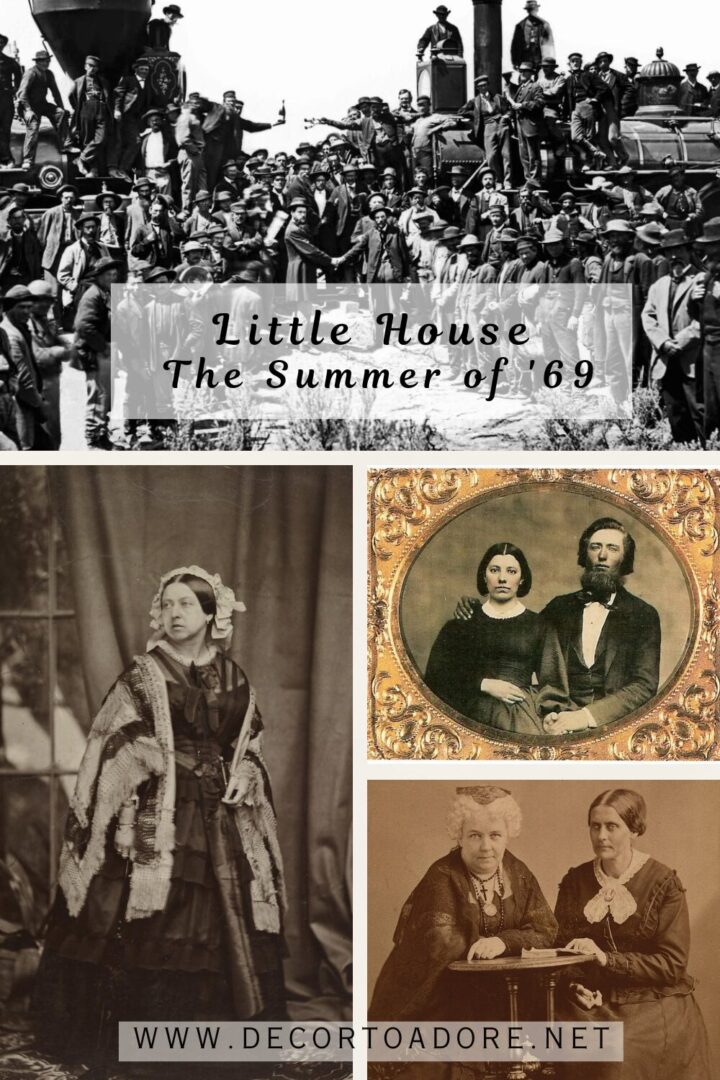
Little House The Summer of ’69
To begin this story we need to journey back to the 1850s. Lansford Whiting Ingalls and Laura Colby Ingalls (Charles’ parents and the grandparents featured in the chapter Dance at Grandpa’s) had moved their family to Concord, Wisconsin. Charles Phillip Ingalls and Caroline Lake Quiner would meet when they became neighbors. They would go on to marry on February 1, 1860. Their witnesses were Peter Ingalls (Charles’ brother) and Martha Quiner (Caroline’s sister).
In September of 1863, Charles Ingalls would purchase land in Pepin County, Wisconsin. Two of their four daughters were born here. Mary Amelia on January 10, 1865 and Laura Elizabeth on February 7, 1867.
Based on legal documents signed by Charles in Pepin County, Wisconsin, in November 1868 it is believed that the family left for Kansas after the winter of 1869. The journey is documented in the first chapter, Going West in Little House on the Prairie.
“If we are going this year, we must go now, ” said Pa. “We can’t get across the Mississippi after the ice breaks. ”
The family would also encounter flooding of creeks and rivers which also suggests a post-winter journey. Their arrival in Kansas probably occurred in late spring or the early summer of 1869.

On a personal note, my branch of the Ingalls family would remain in the Wisconsin and Minnesota area through the birth of my father, Paul Ingalls, in Mankato, Minnesota.
Lansford “James” Ingalls, brother to Charles, my great great grandfather.

Laura’s World in 1869
Taking a look at world leaders most people are probably well familiar with the Queen of England in 1869. Queen Victoria had been ruling the United Kingdom for 32 years by the year 1869. She was, during this time, still in deep mourning for her beloved husband, Prince Albert.
Queen Victoria remains one of the most beloved historical figures of all time.

Charles-Louis Napoléon Bonaparte ruled France as Napoléon III from December 1852 until his exile in September 1870. His father was Louis Bonaparte, the younger brother of Napoleon Bonaparte.

Andrew Johnson was the 17th president of the United States from April 15, 1865 – March 4, 1869. As the Vice President to Abraham Lincoln he assumed the presidency following the assassination and served for three years. He was defeated in the 1868 election by Ulysses S. Grant.
-

- Ulysses S. Grant was the 18th president of the United States, serving from March 1869 to March 1877. He previously had led the Union Army to victory in the American Civil War in 1865 as commanding general.

- Patriotism was still running high in 1869. On February 6th, the magazine Harper’s Weekly published the first picture of Uncle Sam with chin whiskers.

-
The Biggest News Story Of 1869
-
The biggest news story of 1869 in America was that the First Transcontinental Railroad was completed on May 10, 1869, at Promontory Summit, Utah when the Golden Spike was driven into the ground. It connected the Central Pacific Railroad coming from Sacramento and the Union Pacific Railroad out from Chicago. The two railroads had started the project six years earlier, in 1863.
This was one of the many events that would usher in The Gilded Age: a time of exorbitant wealth for some in the United States.
-
More Notable Events
Other events that occurred that year, that continue to shape our lives, were as follows:
On June 8, 1869 Ives W. McGaffey of Chicago patented the first vacuum cleaner, calling it a “sweeping machine”.
Plastic was invented when John Wesley Hyatt patented Celluloid in Albany, New York, on June 15.
Margarine is patented by Hippolyte Mège-Mouriès for use by the French Navy on July 15th. It would quickly spread to the U.S. (I love a bad pun.)
On August 10 Mr. O. B. Brown patents a moving picture projector.
Construction begins on the Grand Central Depot on September 1st for Cornelius Vanderbilt’s New York and Harlem Railroad. It would later be replaced by Grand Central Station, and then Grand Central Terminal.
College Football debuted on November 6, 1869, when Rutgers University defeated Princeton University 6-4 in the first intercollegiate game.
Finishing out the year, on December 10th, women’s suffrage (the right to vote) was granted in Wyoming Territory (US 1st) just a few months after the National Woman Suffrage Association formed on May 15th in New York. It was founded by Elizabeth Cady Stanton (on the left) and Susan B. Anthony.

Beaux-Arts Period
The Beaux-Arts period, which had begun in the 1830s, featured opulent, classically inspired architectural and an artistic movement originating from the École des Beaux-Arts in Paris.
Construction of Neuschwanstein Castle, designed by Christian Jank, began in 1869.

La Grenouillère is an 1869 oil on canvas painting by Pierre-Auguste Renoir. This was a boating and bathing resort on the Seine River, not far from Paris.

A seat in St James’s Park, 1869, by George John Pinwell provides a glimpse at English life.


Ladies Playing Billiards, 1869, by Charles Édouard Boutibonne showcases wealthy ladies and girls fashion.

In contrast is A Girl Sewing, 1869 by Adolf von Becker.

Coming Up
The next post in the Summer of ’69 series will look at one style of dress, the sheer dress, that was worn by women in the warm summer months.
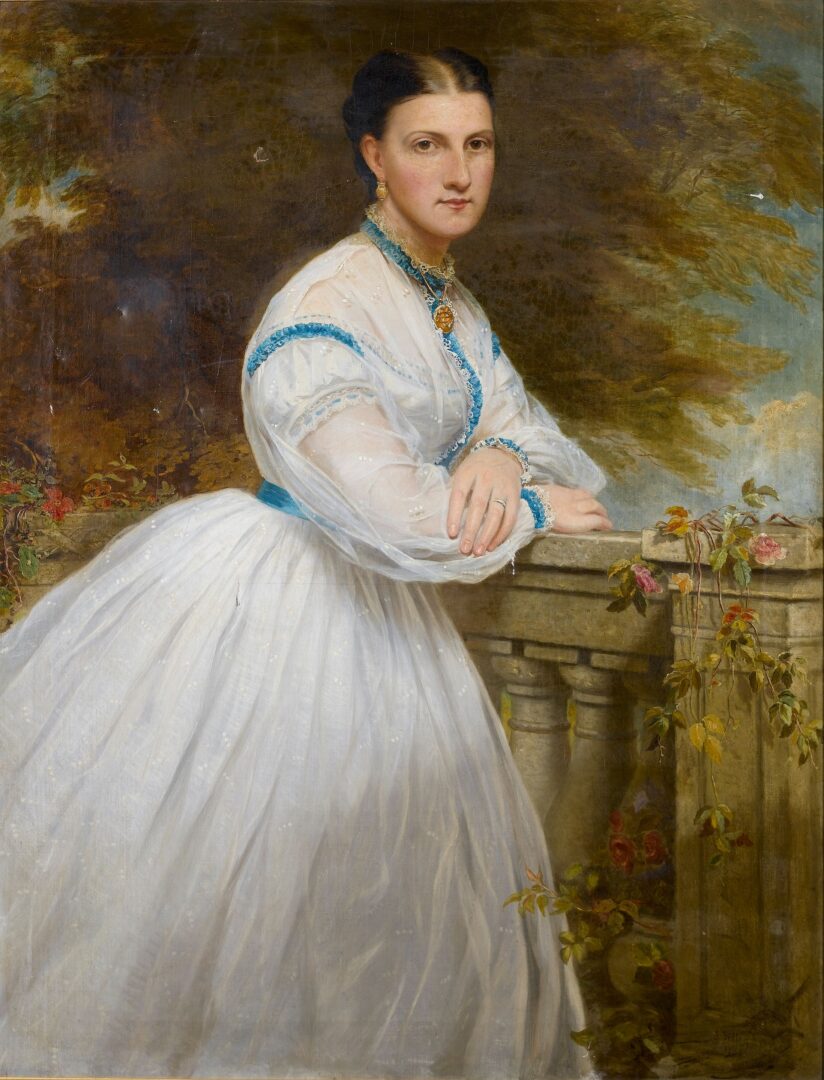
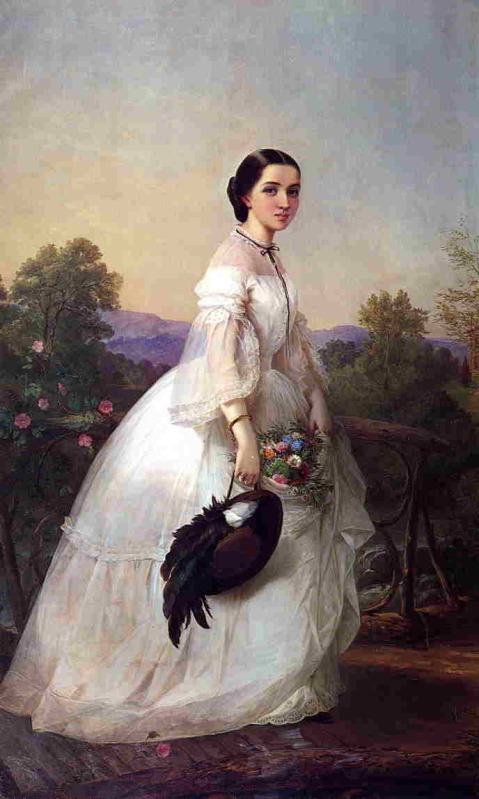
Do you think Ma had such a dress?
Laura
Loved seeing all the beautiful paintings!
Hi Susan,
As someone with a degree in art history I always have to sneak in a pretty painting when I can! LOL
Thank you so much for stopping by!
This was interesting to read and to have linked it to other historical events at the time.
Thank you so much for visiting and leaving such a lovely comment!
I am so excited for your Lessons with Laura Summer of ’69 series! I love seeing all of your costume creations. Each one is gorgeous and a real inspiration for those of us who aspire to be historical sewists. Praying you will find a publisher for your book on the fashions from the LH books so we can follow along on our own prairie journey recreating the pioneer outfits as well. This series is going to be AWESOME! Thank you for bringing us along on this pioneer adventure. Sending love, sweet friend.
Thank you so much for visiting and leaving such a lovely comment!
Vicki,
You always just fill my heart with joy! Thank you for your continued support and kindness.