Ensembles of the Past Sara Gonzalez is a bespoke dressmaker and tailor who offers historically-accurate fabrics, kits, patterns, buckles, sewing notions and more through Etsy. She also hosts workshops and events and can provide historical and costume rentals. For the past few years Sara has also offered internship and apprenticeship programs, as well as in person and virtual study sessions via Zoom.
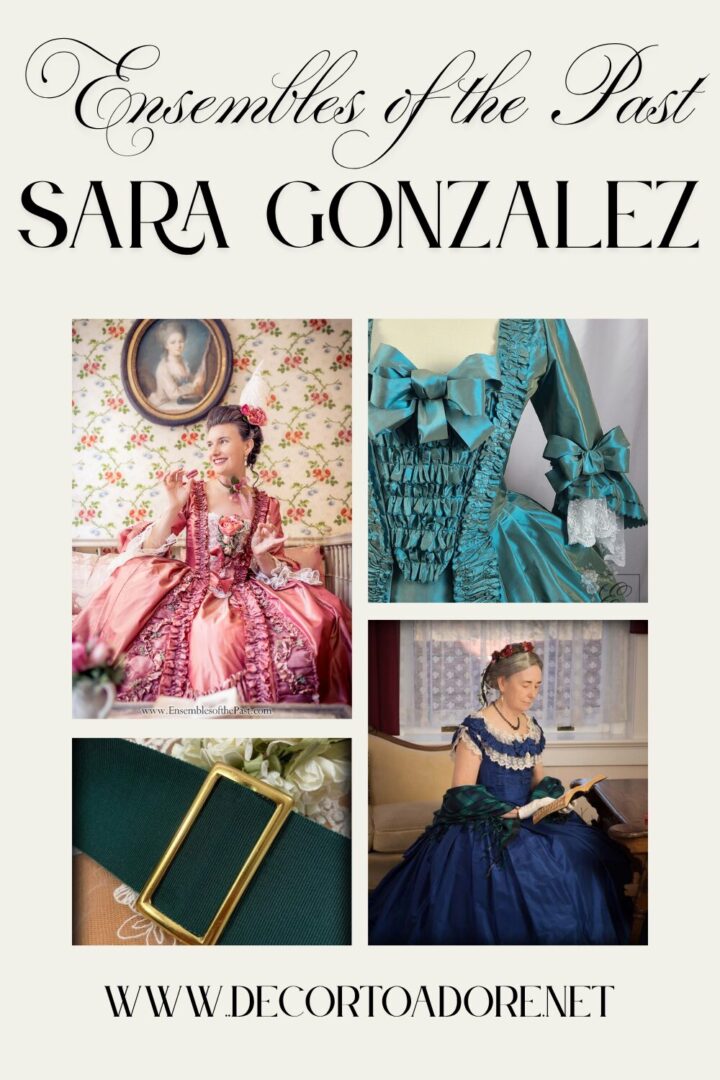
Several of the beautiful reproduction fabrics, belt buckles and more offered by Ensembles of the Past are soon to be featured in the new adaptation of Little House on the Prairie.


Ensembles of the Past Sara Gonzalez
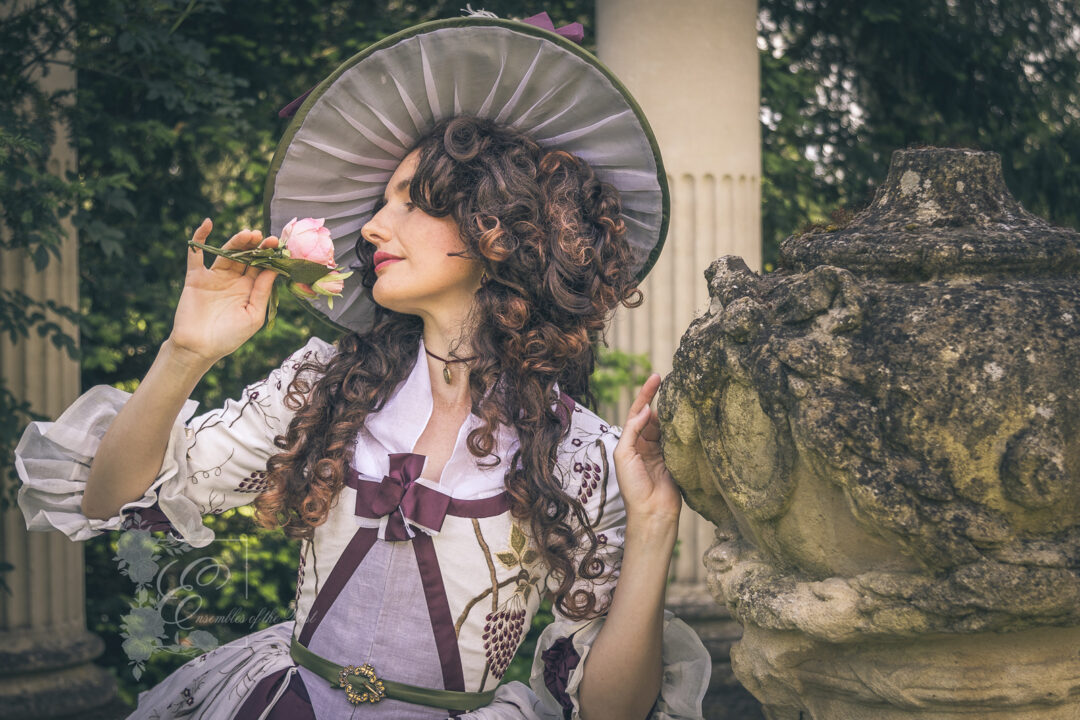
Sara Gonzalez’s sewing career began at the age of 12 when she decided to create a 1770s colonial dress all on her own. Thus began a journey which led to her creating garments of her own design by drawing, drafting, and draping patterns. In every spare moment she has enjoyed the research of studying period fashion plates and fragile museum pieces to be able to create unique clothing inspired by extant (antique) garments for clients around the world.
This dress below was a recreation of a famous gown by designer Charles Frederick Worth who dominated Parisian fashion in the latter half of the nineteenth century.
Her bespoke dressmaking skills are legendary. Sara has a long roster of clients from around the world.
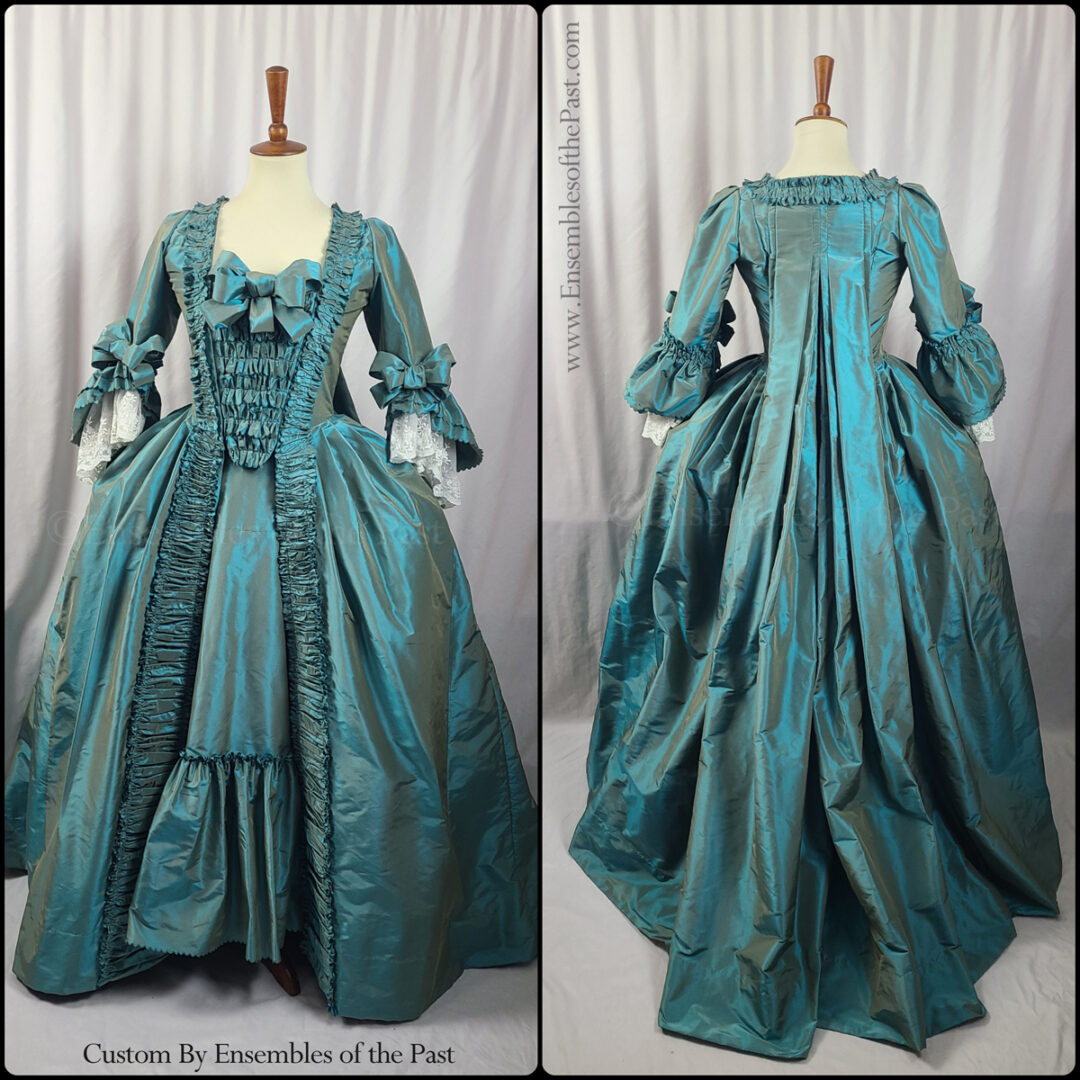
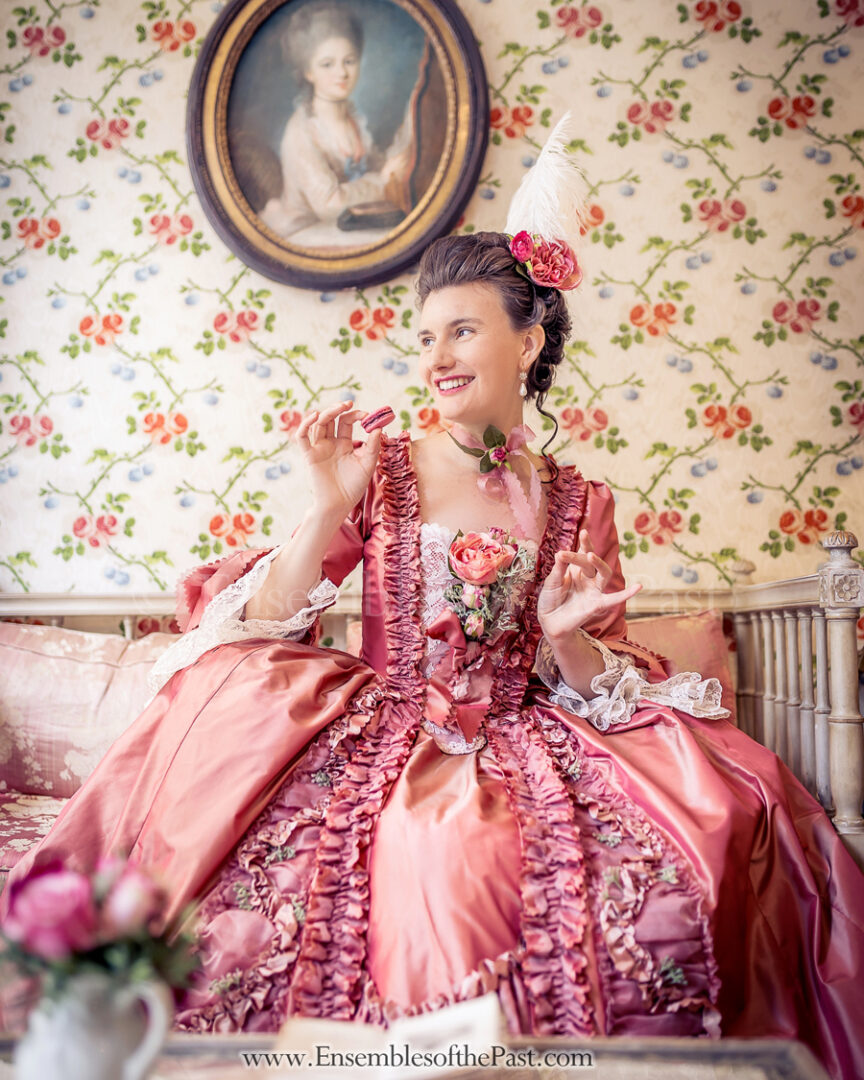
I absolutely fell in love with this 18th century robe à la française gown that she recently created.
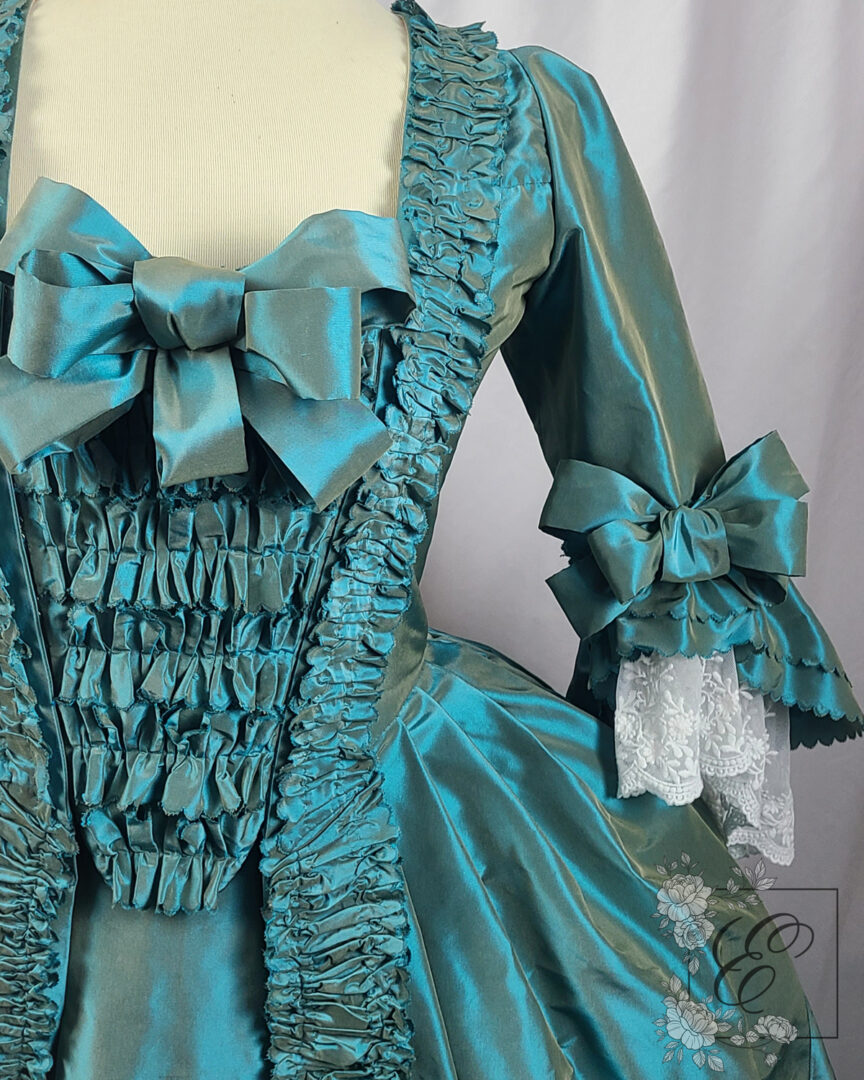
Love truly lives in the details.
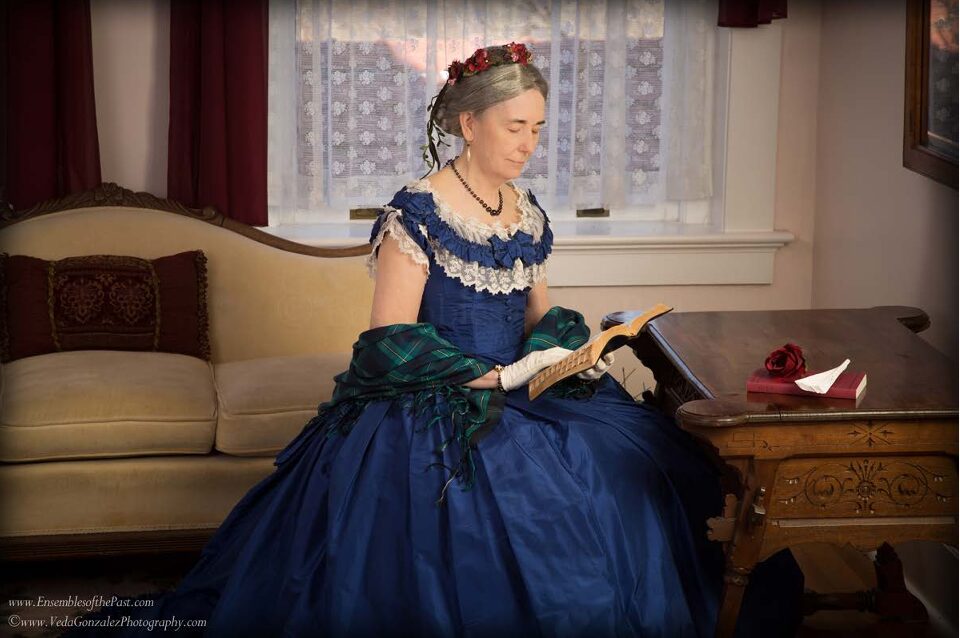
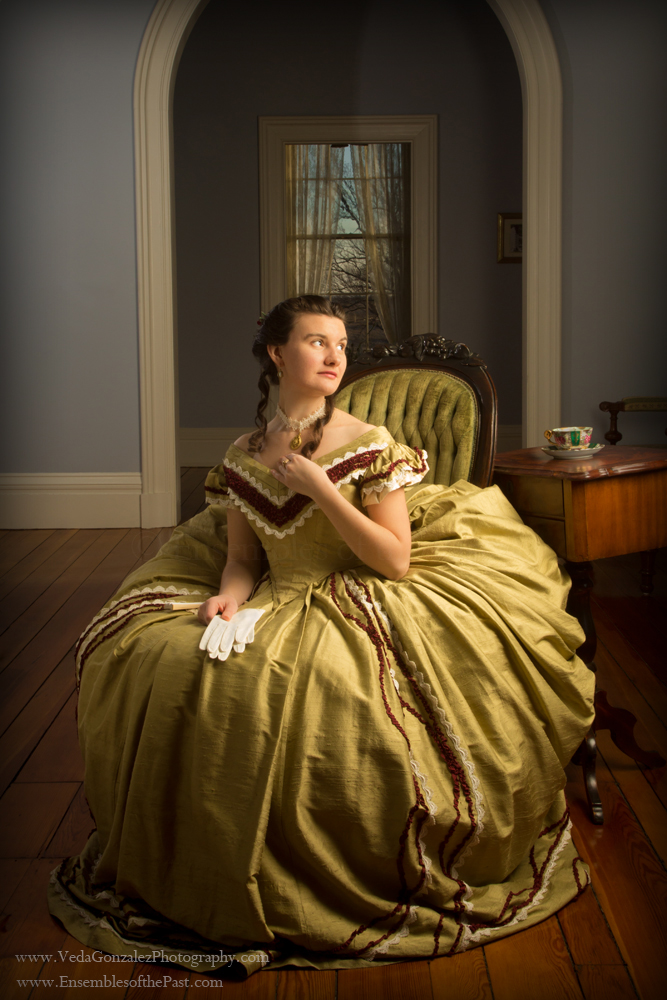
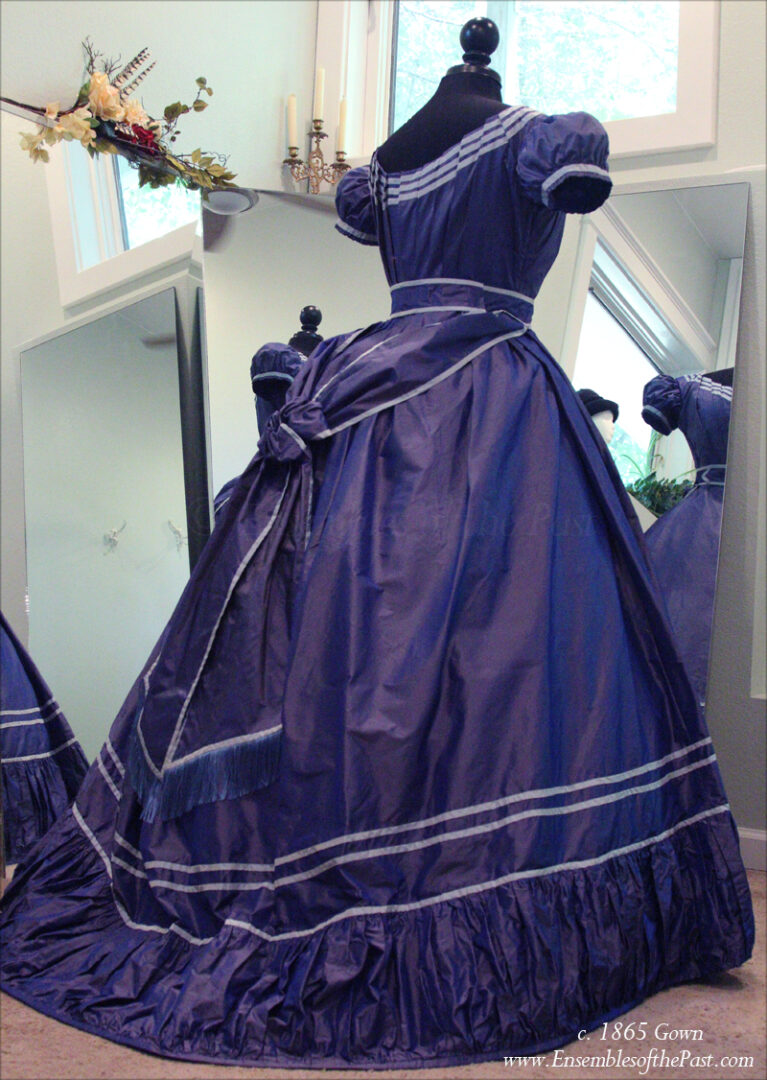
Her mid 19th century dresses are romantic works of art.
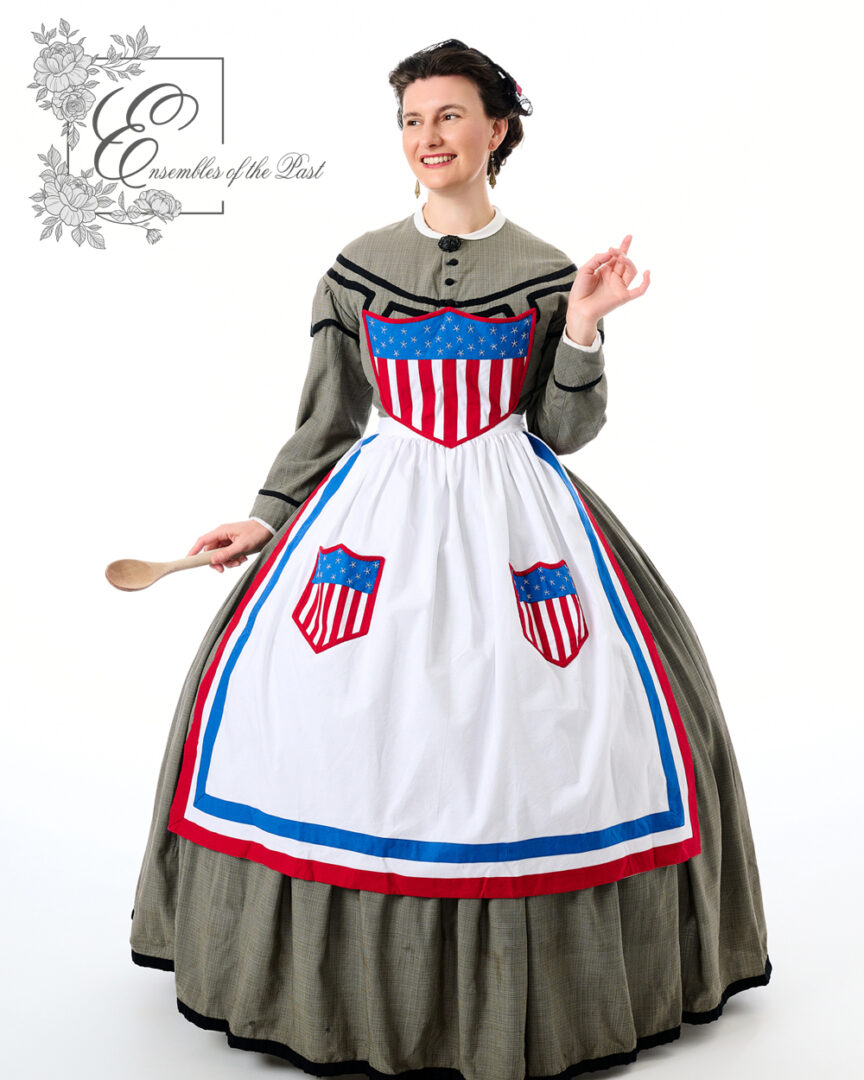
Ensembles of the Past newest kit is this charming Liberty apron. You may recall in this recent post I wrote that patriotism was running high in 1869 when the Ingalls left the big woods for the prairie.
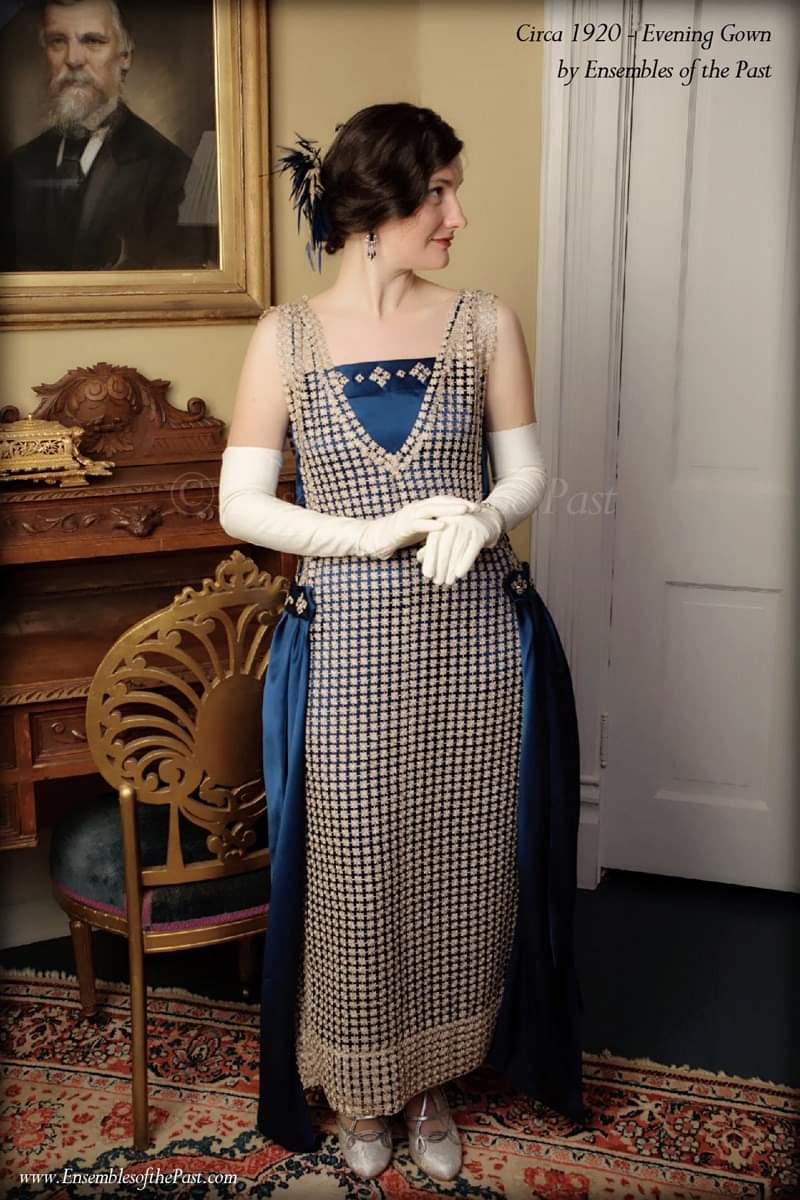
Calling all Downton Abbey fans. Isn’t this confection absolutely swoon worthy?
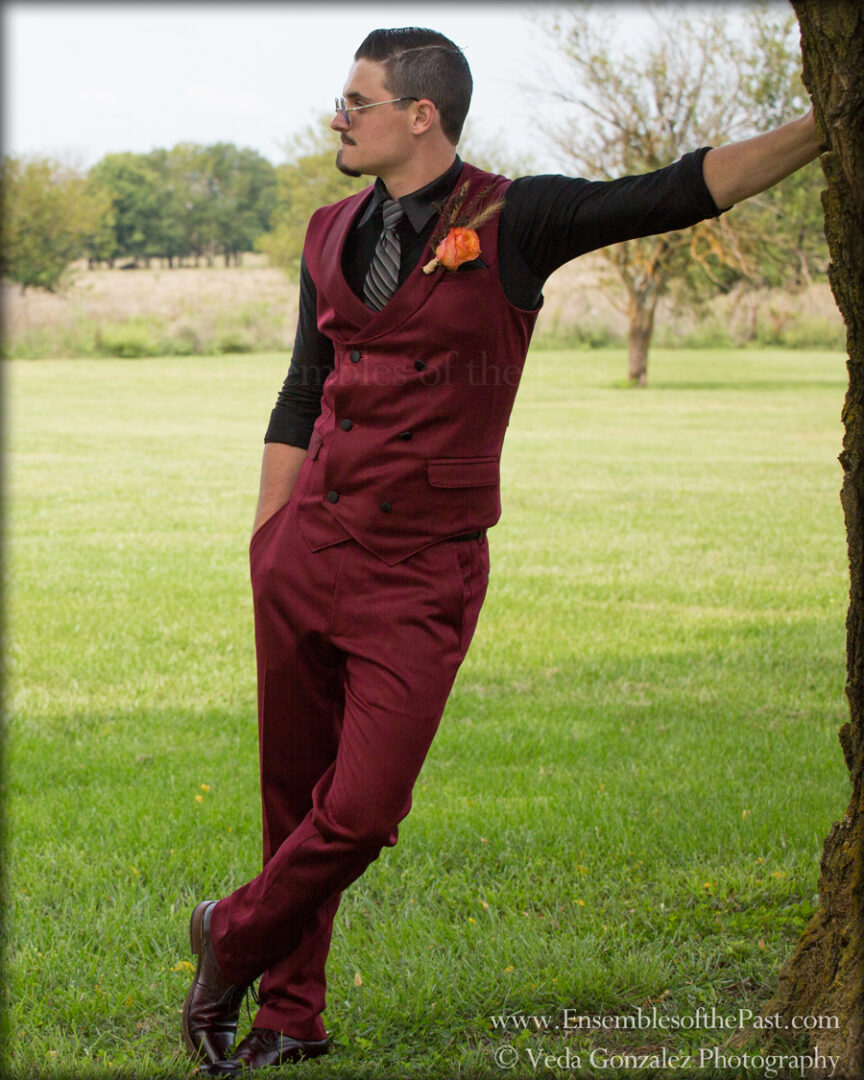
Sara is also a very talented tailor and excels in historic, as well as modern day, menswear.
Get To Know Sara Gonzalez
What inspired you to begin making custom-made historical clothing and garments?
The simple answer is that history inspired me. Classic stories of American history, specifically. However, when I was a preteen, I had an 18-year-old friend who made a few Colonial gowns, and I thought they were the most beautiful thing I had ever seen! I endeavored at that point (at age twelve) to make one for myself to wear while walking around Colonial Williamsburg on our family vacation! I did it that summer, and the success of that project lead me to begin my business just a few short years later!
Do you have a favorite time period?
This is a tricky question to answer, because I LOVE them ALL! However, I always tell people that the mid-19th century holds my heart, because it’s where I made my home and rooted my business, seconded by the 18th century (which is where my love of historical clothing began), along with 20th century vintage (1930-1970), because this is what I wear on a daily basis.
How do you choose your materials and colors?
There are so many factors that play into choosing the correct materials and colors for a period ensemble that this isn’t necessarily a straight forward question to answer. However, just like I always told my costume design students back when I was teaching at SBU about a decade ago: materials and colors should be carefully chosen to reflect the character’s social status, personality, and role or occupation, all while keeping consistent to period accuracy through the fibers, fabric types, prints, and colors available during the specific time period that is being represented.
What is your favorite type of fabric to work with?
Hands down, natural fibers are the best to work with. Within the natural fiber category, any fabric type that has natural ease while maintaining its shape is a dream to work with. Tropical-weight wool, plain-weave dress-weight linen, silk taffeta and dupioni, and silk/cotton blends or plain-weave cottons (such as poplin) are top of the list!
How do you conduct your research before starting a design? Do you rely more on primary sources (like extant garments, diaries, and period art) or secondary sources?
Primary sources are my go-to! Although I design a myriad of designs for a multitude of different clients, if historical accuracy is the goal, primary sources are my only source. If I see a secondary source that I want to draw from, I back-track and find a primary source to validate it before I allow myself to use any aspect of it within my design. That being said, if historical accuracy is not the goal (and it varies by client), I have no problem drawing from secondary sources.
With each creation, do you find that there is a moment in the creative process that sparks your joy?
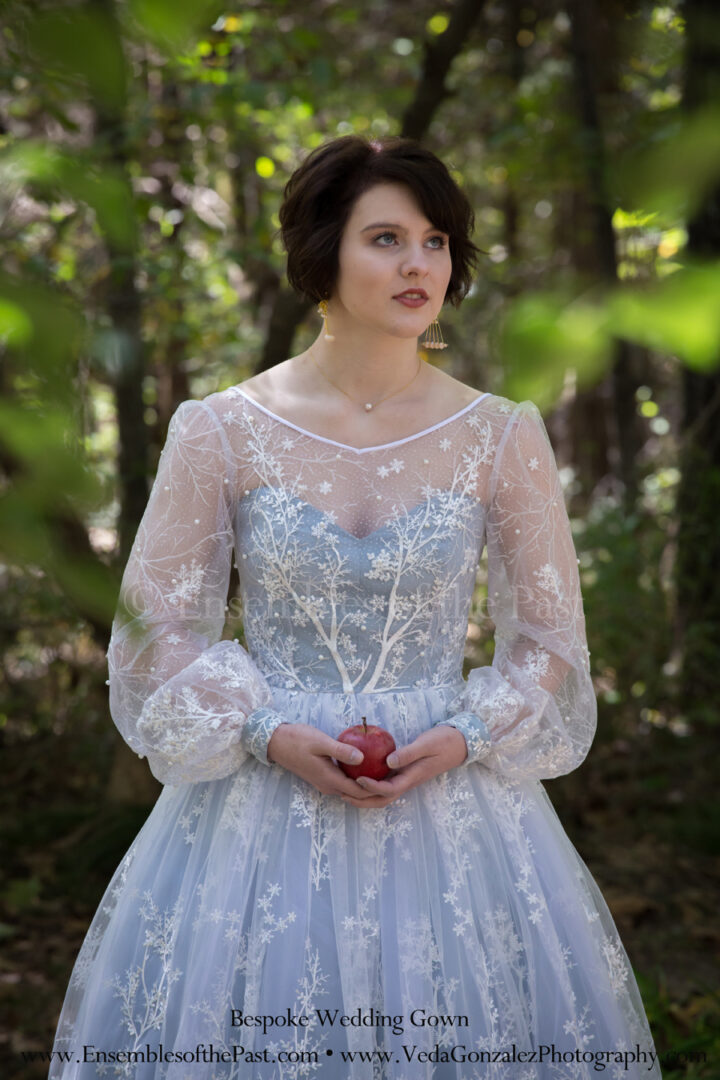
The details. Details will always have my heart. It’s the inside finishing or the endless hours of trim or pleating work or hand-stitched details that bring my heart the most joy. I firmly believe that even the smallest details make the biggest difference in the completed piece, and help to set apart my pieces from others.
Do you have a favorite piece in your portfolio? Why is it your favorite?
This is a difficult one, because every new piece I create is my favorite! I’ve had the pleasure of working on so many amazing pieces, both for myself as well as for clients throughout the 16 years I’ve been operating my business. For example, the 1860s ballgown I created for myself when I was 16 (before I started my business) still holds a special spot in my heart, because I took time to research and work on the details, even when I knew relatively little compared to what I know today. I still wear the gown to period balls! Another special piece of mine is my recent pink 1770s rose garden robe à la française, which I created under intense deadlines to wear to Fete Galantes 2024 after the dry-cleaners destroyed the robe à la française I had previously planned to wear. For clients, I’ve had the pleasure of creating several Worth reproduction gowns, as well as design one-of-a kind wedding gowns that still make my own heart swoon.
Do you ever have moments where you want to throw a project in the time out corner? If yes, What do you do when you are not feeling inspired, or when you are stuck
on a piece?
Always. I frequently jokingly (but also seriously) tell others and myself that if I don’t, at one point or another, reach the “I hate this, and why am I making this?” moment during a project, it’s an almost guarantee that it won’t turn out well! The moment I always remind myself of when I reach this point is that when I was creating my first Civil War ballgown (the one I previously mentioned). I tried on the finished bodice before I had made the skirt, and almost cried. I looked like a football player. My sleeves and shoulders were SO big! I hated it. What I didn’t realize at the time was that the skirt, over the hoop skirt, would actually balance it all out and it would truly be beautiful. I’m so glad I did not give up and continued. What I thought I hated became the thing I loved the most. I’ve learned through the many years since that this is often the case when I reach the moment in the project that I don’t think it’s turning out. My advice to myself and others is to trust the process and keep going. There is rarely anything you can’t fix.
Which artists, books, films, or everyday experiences inspire you?
Shockingly, my biggest inspiration for where I am currently at has been the entrepreneurs in my family. While none of them (to my knowledge) have been dressmakers or tailors, the American Dream runs thick in my family, and both my grandfathers were successful entrepreneurs in their own fields. I grew up learning from them, hearing their stories, and being encouraged by their words. Although they are no longer here on this earth, I hope that I have made them proud, along with the grandmothers who taught and cultivated the foundation for my current craft.
Have you ever made an error during the cutting or sewing stage but the project still turned out beautifully?
Yes, no matter how good you are or how many garments you’ve made, we are all human, and errors still occur. Like I previously mentioned, there is rarely anything you can’t fix. The biggest error I think I have ever made was when I was within an hour of finishing a capelet, the day before my client was to pick up her garments, and I accidentally pressed the capelet with too hot of an iron setting – it MELTED! I didn’t have any spare time to think, so I immediately cut another piece and replaced the entire panel as quickly as I could. It was finished on time, and my client never knew.
What is your favorite random tool?
Soap for marking. My grandmother (a product of the depression) taught me how to use it, and I prefer it over any other marking tool available on the market!
How To Find Sara
Facebook: https://www.facebook.com/EnsemblesOfThePast/
Instagram: https://www.instagram.com/ensembles_of_the_past/
Etsy: https://ensemblesofthepast.etsy.com
What is the best way for a potential client to contact you?
I am available to reach through email, phone, Etsy, or social media, but email is the preferred way to be contacted by new potential clients interested in custom garments or sewing work: info@ensemblesofthepast.com
Thank you Sara for keeping historical sewing techniques alive!
Watch Party
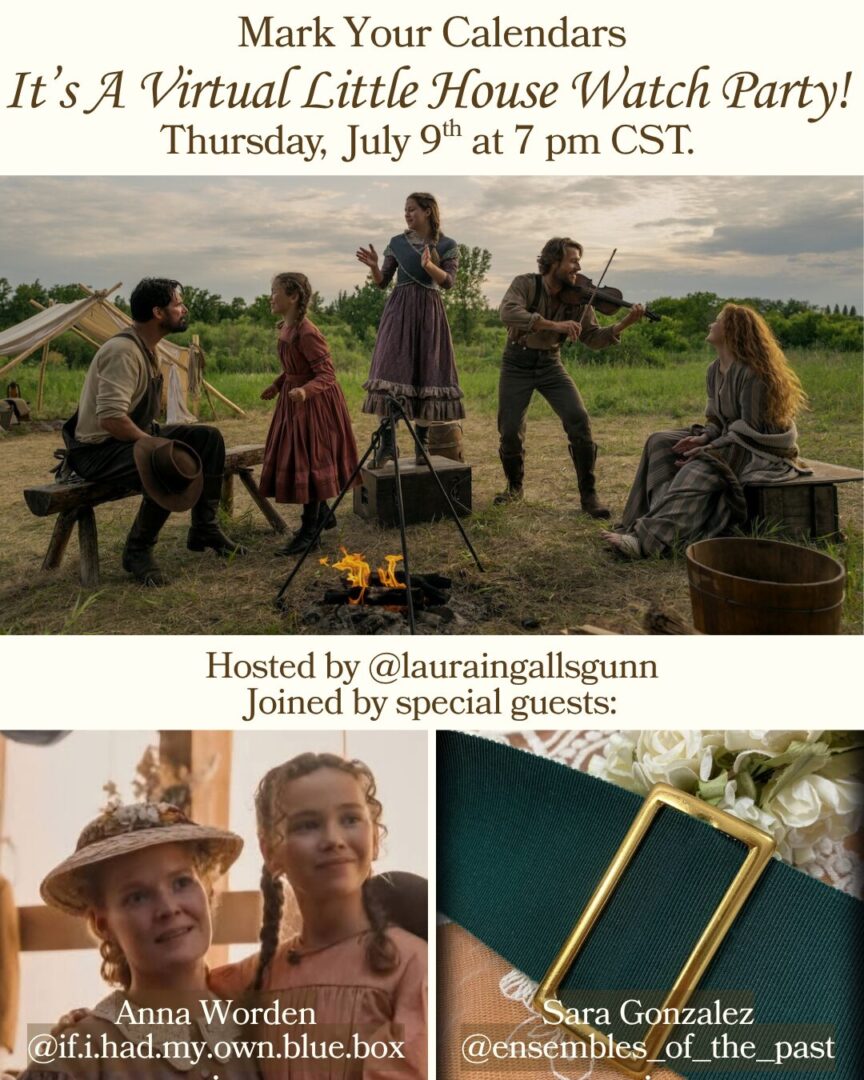
To celebrate, Sara Gonzalez is joining me this Thursday as a special guest for the Little House on the Prairie virtual watch party. Together we will watch the first episode together. This is a free event, but you do need to have a Netflix subscription.
There is still time to sign up. Just send your email to me at decortoadore@hotmail.com
I’ll be back tomorrow with more Little House fashion.
Laura